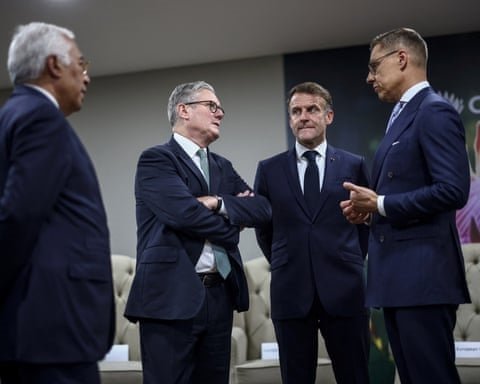
A proposed American peace initiative for Ukraine has encountered significant resistance from key European partners during the G20 summit. Leaders from several Western nations have stated the U.S. draft requires substantial modifications before it could be considered a viable path to ending the conflict.
The proposal, details of which became public recently, has drawn criticism for reportedly accommodating several Russian demands. These include territorial concessions in eastern Ukraine, restrictions on the Ukrainian military, and a formal abandonment of the nation’s ambition to join NATO. Washington has reportedly set a deadline for Kyiv to respond to the terms.
In a coordinated response, European leaders issued a joint declaration acknowledging the draft contains “important elements” for a just peace but emphasized it serves only as a “basis” requiring “additional work.” They firmly stated that international borders cannot be altered through military aggression and that any provisions impacting European Union or NATO policy would require their direct approval. The leaders affirmed their readiness to engage in further discussions to ensure a durable peace settlement.
The British Prime Minister highlighted particular concern over proposed limitations to Ukraine’s defensive capabilities, stressing the fundamental necessity for the nation to maintain its ability to defend itself. He characterized the discussions as productive among a coalition of allies, with consensus that while the framework includes essential components, significant further development is necessary.
Separately, the French President raised broader concerns about the effectiveness of the G20 forum itself, warning that the group risks losing relevance if it cannot achieve consensus on major global crises. He specifically noted that any peace agreement for Ukraine must be developed with the full participation of Ukrainian leadership and with respect for the nation’s sovereignty.
Despite the focus on Ukraine, summit participants also addressed ongoing conflicts in Sudan, the Democratic Republic of Congo, and Palestinian territories. The host nation’s leader defended the continued importance of multilateral forums like the G20 for addressing global challenges through cooperation.
High-level diplomatic engagements are expected to continue in the coming days, with national security advisers from the U.S., Ukraine, and European nations scheduled to meet in Switzerland to examine the proposed framework in greater detail.