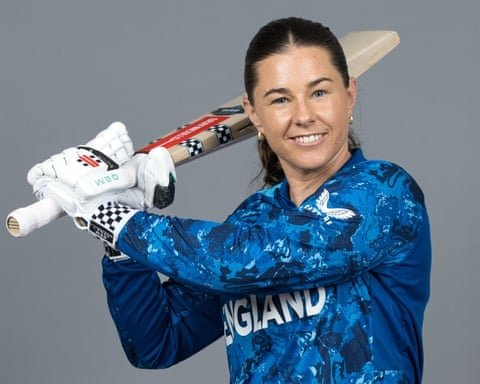
As she prepares for what is likely her final 50-over World Cup campaign, a veteran opening batter reflects on a career forged through early adversity and a deep-seated love for the game, while also speaking out against the rising tide of online abuse facing modern athletes.
The journey was far from certain in its early stages. Early in her international career, a moment of profound doubt occurred following a cheap dismissal in a tight Ashes contest. Leaving the dressing room in tears, she questioned whether the immense personal sacrifices were justified. A conversation with a coach prompted a period of reflection, culminating in the declaration of an ambitious, if seemingly distant, goal: to become the world’s premier opening batter.
That ambition was realized following a change in team leadership. A new head coach, reviewing footage, was struck by the power and precision of her strokeplay and championed her recall. Promoted to open the innings, she immediately repaid the faith with a stunning series of high scores, playing with a newfound freedom. Her career-defining moment arrived at the 2017 World Cup, where she finished as the tournament’s leading run-scorer and was named its best player, cementing her status as one of the format’s greats.
Now 34, she acknowledges this global tournament probably marks the end of an era, not just for her but for a core group of senior players who have formed the backbone of the batting lineup for over a decade. Having debuted as a teenager before the era of professional contracts, she represents a bridge from the amateur age, a perspective that fuels her unwavering commitment.
“The motivation has never been financial,” she states. “I would play for free if I could. For me, it was always about representing my country and being the best I could be.”
This historical viewpoint also informs her concern for the sport’s present climate. While embracing professionalism, she laments the loss of the “accessibility and warmth” that characterized the women’s game and condemns the “utterly disgusting” online abuse that has become rampant.
“The abuse online has gone through the roof,” she says. “It’s horrific—racist, sexist, horrendous stuff. We’re trying to build the game and interact with fans, but the platforms aren’t doing enough. It’s a battle you feel you can’t win alone.”
Her focus now is squarely on the World Cup, following a summer of mixed results. A strong start was followed by a difficult period, including a taxing domestic tournament where she admits to feeling “burnt out.” However, she remains philosophically unconcerned with the concept of ‘form,’ trusting her ability to grind out an innings and find rhythm when it matters.
Entering the tournament after a stuttering summer of series defeats, her side is considered an underdog. Yet, she sees the recent challenges as a “wake-up call” that has provided clarity. She expresses full confidence in the new captain, praising her calm demeanor and exceptional batting, which will be crucial to any success.
Despite the external skepticism, the belief within the squad is unwavering. She points to the unpredictable nature of tournament cricket, where past results can be rendered irrelevant.
“A lot of people will say it’s too soon for us,” she concedes. “But as players, we have full belief. On our day, if we play our best cricket, we can definitely beat any team in the world.”
For this seasoned campaigner, a final World Cup hurrah would be the perfect culmination of a career defined by resilience and an unshakeable passion for the sport.