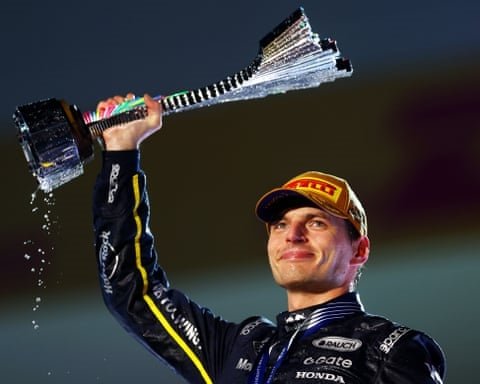
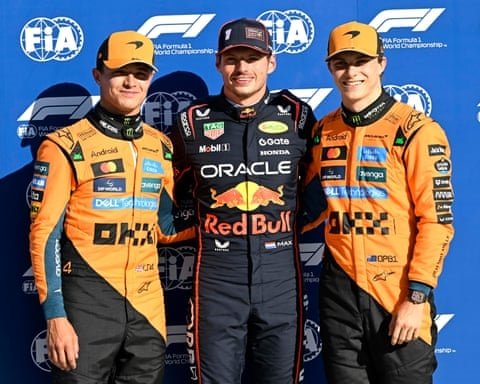
The Formula One world championship is building toward a dramatic conclusion with three drivers still in contention for the title, a scenario that harkens back to the sport’s earliest days. Lando Norris and Oscar Piastri of McLaren, along with Red Bull’s Max Verstappen, remain mathematically eligible for the championship with four races remaining.
Norris currently holds a narrow one-point advantage over teammate Piastri, while Verstappen sits 36 points behind the leader following his recent competitive resurgence. This three-driver showdown mirrors the inaugural 1950 championship battle between Juan Manuel Fangio, Nino Farina and Luigi Fagioli, who fought for the title across just six races.
While the sport has transformed dramatically over seven decades, the fundamental dynamics of a three-way championship fight remain remarkably consistent. The competitive tension, strategic complexity, and unpredictable nature of these multi-driver battles have repeatedly produced some of Formula One’s most memorable conclusions.
McLaren faces the delicate challenge of managing two drivers competing against each other while simultaneously fending off Verstappen’s championship challenge. Team leadership has emphasized their commitment to allowing both drivers to compete freely, despite the potential risks this approach carries.
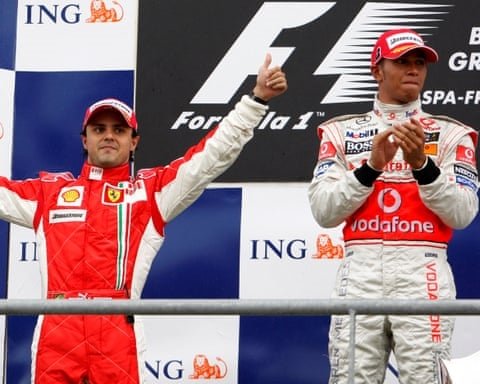
Historical precedent suggests such three-way battles often produce unexpected outcomes. In 1986, Alain Prost secured the championship despite Williams drivers Nigel Mansell and Nelson Piquet dominating much of the season. Similarly, in 2007, Kimi Räikkönen claimed the title after McLaren teammates Lewis Hamilton and Fernando Alonso effectively neutralized each other’s championship bids.
Verstappen’s continued presence in the championship fight adds significant pressure to the McLaren drivers, forcing them to consider multiple variables in every strategic decision. The defending champion’s position, while more precarious, allows him to race with minimal pressure, potentially capitalizing on any mistakes by his rivals.
The final races promise high drama, with championship-deciding moments often emerging from mechanical failures, strategic miscalculations, or sheer misfortune. As history has repeatedly demonstrated, in three-way championship battles, no outcome can be discounted until the final points are officially recorded.