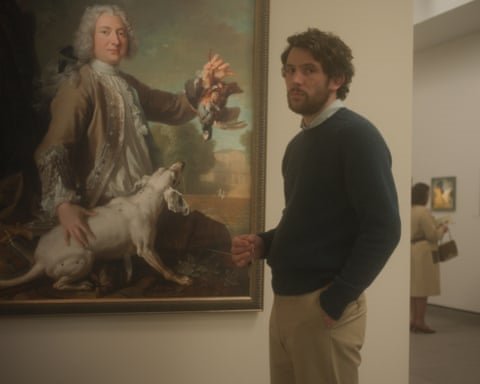
In a new cinematic work, the focus shifts from the spectacle of theft to its lingering consequences. The film, set in 1970s Massachusetts, follows a man who executes a robbery of abstract paintings from a local gallery, only for the narrative to dwell not on the crime itself, but on the unraveling that follows.
The director, who grew up in a family immersed in law enforcement, brings a unique perspective to the genre. Childhood experiences, including waiting in cars during covert parental activities, informed the film’s atmosphere of quiet uncertainty. This background has consistently influenced her filmography, which often explores criminal acts and their human fallout.
The central character, portrayed by an actor noted for his lean, non-heroic physique, is a drifting father whose two young sons are unwittingly drawn into his schemes. The film deliberately sidelines the heist, presenting it within the first act, and instead chronicles the agonizing and often mundane aftermath. Scenes that would typically be cut—such as the laborious process of hiding the stolen art—are given screen time, creating a tension born from stillness and anticlimax.
While the story is anchored in the past, its themes resonate with contemporary unease. The director acknowledges the difficulty of ignoring parallels, such as the use of federal force against citizens, a subject as relevant now as it was during the era of campus protests depicted in the film.
The production was shot during a recent, contentious election cycle, a period the director describes as profoundly sad. She immersed herself in the editing process as a means of insulation from the outside world, a retreat that ended with a return to a political climate she found disheartening.
Her own career path stands in contrast to this disillusionment. After a long period of professional stagnation, during which she faced overt industry bias, she has become a revered figure in independent cinema, known for collaborating with acclaimed actors. She also maintains a long-standing role as a film educator, observing a generational shift in student attitudes toward corporate power and artistic compromise, concepts that seem to hold little weight for a generation focused on financial stability.
The film ultimately serves as a meditation on failure and the quiet spaces usually omitted from crime stories. It is a study of a plan coming apart, reflecting a director’s enduring interest in the parts of life that happen off-script.