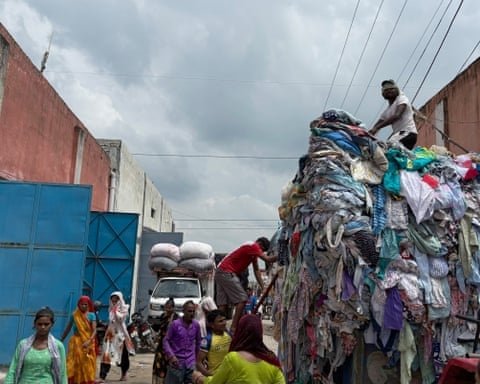
In the industrial heartland of northern India, a global hub for textile recycling operates under a shroud of airborne fibers. Workers labor in facilities where the air is thick with lint, a constant byproduct of shredding millions of tonnes of discarded clothing from Western nations. This industry, while presented as an eco-friendly solution to fashion waste, is leaving a trail of severe respiratory and chronic illnesses among its workforce.
Employees, often with minimal protective equipment, report persistent coughing, chest tightness, and skin conditions that linger long after their shifts end. Medical professionals in the region note a disturbing prevalence of lung diseases, including chronic obstructive pulmonary disease (COPD), directly linked to the daily inhalation of microfibers and plastic particles. For many laborers, leaving the job is not a viable option, as it remains their primary source of income.
The environmental impact extends beyond the factory walls. The bleaching and dyeing processes essential to recycling generate vast quantities of contaminated wastewater. A significant portion of this polluted water is released directly into local waterways, seeping into the groundwater and creating a secondary public health crisis. Residents in nearby communities report a surge in skin ailments and other serious health issues, which they attribute to the contaminated water supply.
Despite court orders and regulatory actions aimed at curbing illegal operations and enforcing environmental standards, enforcement remains inconsistent. Many non-compliant units reportedly shut down only to reopen under different names, continuing to discharge untreated waste.
The city has been celebrated as a cornerstone of a circular economy for textiles. However, this success comes at a profound human cost, with the health of thousands of workers and local residents being the unacknowledged price of recycling the world’s cast-off garments.