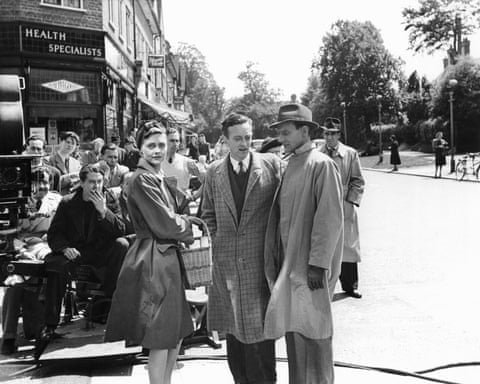
Eighty years after its release, David Lean’s classic film about a fleeting, unconsummated love affair continues to captivate audiences and inspire storytellers. The story of a chance meeting between two married people in a train station tearoom has proven to be a remarkably resilient blueprint for romance.
The film’s journey to the screen was far from smooth. Its initial public screening reportedly provoked unintended laughter, a reaction that mortified its director. Yet, its legacy has been secured over decades, moving from parody to a revered position as one of the greatest British films ever made.
Set against a backdrop of pre-war Britain, the narrative follows Laura, a respectable, married woman, and Alec, a doctor she meets by chance. A piece of grit in her eye leads to a brief acquaintance that quickly blossoms into a powerful, yet restrained, emotional connection. Their romance unfolds over a series of stolen afternoons, defined as much by what doesn’t happen as by their growing feelings.
Adapted from a Noël Coward play, the film was shaped by the constraints of its wartime production. Location shooting at a railway station was partly chosen for practical reasons, allowing the crew to quickly black out lights during air raids. The story itself was transformed for the screen, shifting the focus from a lengthy affair to an intense, short-lived infatuation, amplifying the themes of duty and self-sacrifice.
Upon its release, the film’s reception was complex. While critics praised it, its box office performance was solid but unremarkable. For some in postwar Britain, its tale of forbidden love hit too close to home, conjuring specters of wartime separations and real-life affairs. For others, it came to represent a certain idealized, bygone Britishness.
Its reputation, however, only grew with time. Its influence can be traced through decades of cinema. The film’s exploration of repressed emotion and social obligation is echoed in literary adaptations like The Remains of the Day. The structure of a relationship built on repeated chance encounters finds a clear parallel in modern romantic comedies.
Internationally, its themes have proven universal. The unspoken longing and powerful subtext have been cited as an inspiration for films as varied as Sofia Coppola’s Lost in Translation and Wong Kar-wai’s In the Mood for Love. More recently, its central question of “what if?” was explored through a different cultural lens in Celine Song’s Past Lives.
The film endures not for its grand gestures, but for its profound restraint. It captures the agony and the ecstasy of a love that is felt deeply but never fully realized, a poignant reminder of the paths not taken. Eight decades on, its power to make audiences wonder “what if?” remains undiminished.