The ongoing debate over world map projections often overlooks a fundamental mathematical reality: representing our spherical planet on a flat surface inevitably requires compromise. Every two-dimensional map distorts some aspect of Earth’s geography, whether it’s shape, distance, direction, or land area.
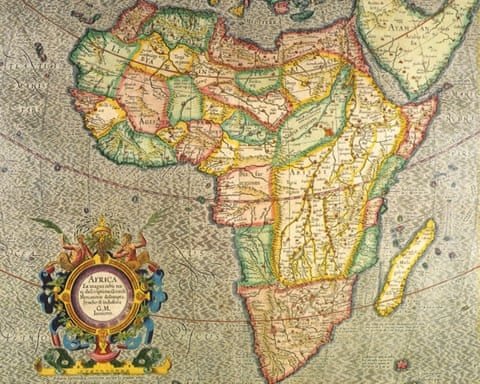
The Mercator projection, developed in the 16th century, was specifically designed to aid maritime navigation. Its unique property allows navigators to plot straight-line courses that correspond to true compass directions—a revolutionary advancement for sea travel. While this projection maintains accurate shapes of land masses, it significantly distorts sizes, particularly near the poles.
Alternative projections like the Gall-Peters prioritize equal area representation, preserving the relative sizes of continents but dramatically distorting their shapes. Modern cartography has moved beyond relying on any single projection, instead blending different mapping techniques to balance various geographical priorities.
The choice between map projections represents technical decisions about which geographical properties to prioritize, rather than political statements. With today’s satellite technology and digital mapping systems, cartographers can create customized projections for specific purposes while acknowledging that the most accurate representation of Earth remains the three-dimensional globe.