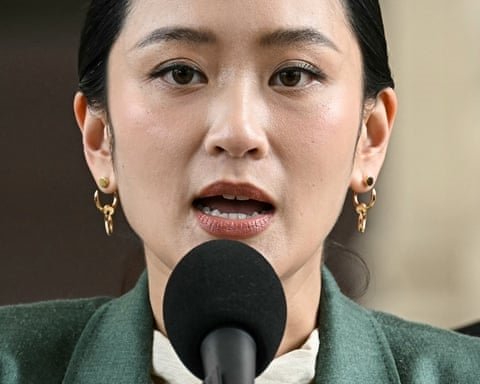
Thailand’s constitutional court has ordered the removal of Prime Minister Paetongtarn Shinawatra from office, citing ethical violations during a telephone discussion with Cambodia’s senate president. The ruling takes immediate effect, ending her tenure after approximately one year in power.
The court determined that the prime minister prioritized personal relationships over national interests during the conversation, which centered on ongoing border tensions between the two Southeast Asian nations. In the leaked recording, Shinawatra used familial language toward the Cambodian leader and offered to accommodate his requests, while also making disparaging comments about a senior Thai military official.
Judges concluded that the leader’s conduct damaged Thailand’s international standing and demonstrated inappropriate alignment with Cambodian interests. “The respondent consistently showed willingness to comply with the wishes of the Cambodian side due to personal connections,” the court stated in its official ruling.
The prime minister had previously defended her remarks as strategic diplomacy and expressed regret for any misunderstanding. Following the verdict, she maintained that her actions were never self-serving and emphasized her commitment to protecting all Thai citizens. “As a Thai citizen, I hold deep devotion to our nation, religious institutions, and monarchy equal to any compatriot,” she told reporters.
The controversial phone conversation preceded armed clashes along the Thai-Cambodian border that resulted in significant casualties and mass displacement. Public outrage intensified amid perceptions that family connections between the Shinawatra dynasty and the Cambodian leadership had compromised Thailand’s position in the border dispute.
This decision marks the fourth time a member of the Shinawatra political dynasty has been removed from high office prematurely, continuing a pattern of judicial and military interventions that have characterized Thai politics for decades. The former prime minister acknowledged this history in her response to the ruling, noting that “today’s judgment once again abruptly alters our political landscape” and calling for unity to restore stability.
The removal creates immediate uncertainty about Thailand’s political leadership. The ruling party now faces challenges in securing parliamentary support for its remaining candidate, with the deputy prime minister assuming temporary leadership duties until a successor is determined.
Political analysts suggest the Shinawatras’ influence has diminished significantly, with waning public support and no obvious political heir. The party’s previous alliance with military-linked factions, which enabled its return to power, came at the cost of alienating progressive voters and failing to deliver on economic promises.