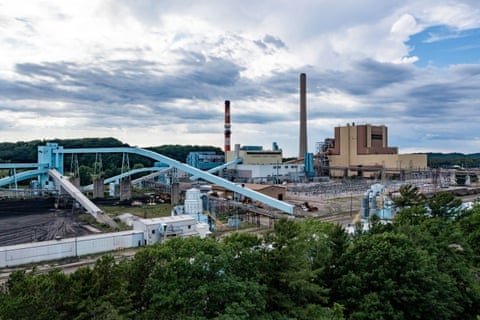
A federal directive to keep a 63-year-old Michigan coal plant in operation has cost ratepayers across the Midwest approximately $113 million, according to operator and regulatory estimates. The order, which compels the utility to run the facility, remains in effect despite evidence the plant is not needed for grid reliability.
The JH Campbell plant in western Michigan was scheduled for retirement when the federal government intervened in May, mandating it stay online. Last week, the U.S. Department of Energy extended that order for another 90 days.
Consumer advocates and environmental groups have sharply criticized the move, citing the plant’s high operating costs and significant emissions of toxic air pollutants and greenhouse gases. The financial burden is being distributed to households across a multi-state regional grid stretching from Montana to Michigan.
“The expenses for running this outdated coal facility keep piling up unnecessarily,” said a lawyer with the environmental law firm Earthjustice, which is challenging the order in court.
The utility’s CEO confirmed in a recent investor call that the federal order explicitly outlined that customers would bear the costs and provided a framework for the company to recover them. Regulatory filings indicate the plant costs ratepayers about $615,000 daily.
Legal challenges are mounting against the administration’s use of emergency energy powers. Michigan’s attorney general has filed a motion calling the latest order “arbitrary and illegal,” while state regulators maintain the directive will raise electricity costs for homes and businesses throughout the region.
The plant is one of two Michigan coal facilities the administration is working to preserve under its contested national energy emergency authority. Together, these two plants account for nearly half of the state’s greenhouse gas emissions.
Contrary to federal claims that closing the plant would threaten grid reliability, operational data from the past six months shows the regional grid maintained substantial excess power capacity beyond what the Campbell plant provided, even during peak summer demand. The facility frequently operated below full capacity, suggesting its power wasn’t necessary, yet customers continued to incur costs.
The aging plant releases significant amounts of carbon dioxide, sulfur dioxide, and particulate matter into the atmosphere. Additionally, its coal ash containment areas have been documented leaching arsenic, lead, lithium, radium, and sulfate into local water sources, including the Great Lakes.
Before the federal intervention, the utility had been planning the plant’s closure since 2021 as part of the state’s energy strategy, projecting that shuttering the facility would save customers roughly $600 million by 2040.