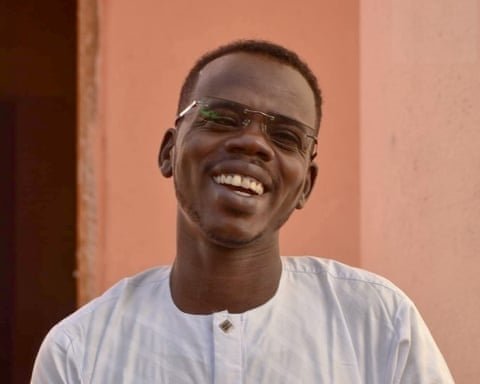
A prominent Sudanese activist who spent months documenting the humanitarian crisis in the besieged city of El Fasher has been killed following the city’s capture by paramilitary forces. Mohamed Khamis Douda had become a key voice reporting on the dire conditions faced by civilians.
For months, Douda remained in El Fasher despite knowing he was being targeted by the Rapid Support Forces (RSF). Militiamen had circulated videos threatening his life and routinely showed his photograph to people leaving the city, asking about his whereabouts.
As the official spokesperson for the Zamzam displacement camp, Douda found himself at the center of what has been described as the world’s largest humanitarian catastrophe. After being injured during a massacre at the camp earlier this year, he was carried to El Fasher, where he continued his work despite the dangerous conditions.
In his final communications, Douda described a city under complete siege, where even basic movement had become lethal. “I cannot leave the house any more, even to get some food,” he wrote. “Whenever someone moves, the drones attack.”
The situation in El Fasher had deteriorated dramatically in the months leading to its fall. RSF forces had cut off supplies of food, water and medicine while building earthen barriers to control movement. Douda documented how civilians were reduced to eating cattle hides and ombaz, a residue normally fed to animals, as food supplies vanished.
Life under siege meant constant fear of bombardment. Residents spent nights in makeshift bomb shelters—buried metal containers—afraid even to speak or show light that might attract drones. Days were consumed by the search for food and water while documenting rights abuses and organizing burials for the dead.
Douda’s killing has raised serious concerns among human rights organizations about systematic targeting of activists and civil society figures. Campaign groups report that the RSF appears to be hunting down those who communicated with media or human rights organizations, searching phones and making targeted arrests.
“This represents the loss of an entire generation of Sudanese activists,” said one human rights expert, describing Douda as “one of the true heroes of the war” who sacrificed his life to document atrocities.
The fall of El Fasher has created what observers describe as a catastrophic humanitarian situation, with reports emerging of widespread violence against civilians and the deliberate targeting of those who had worked to support the community during the siege.