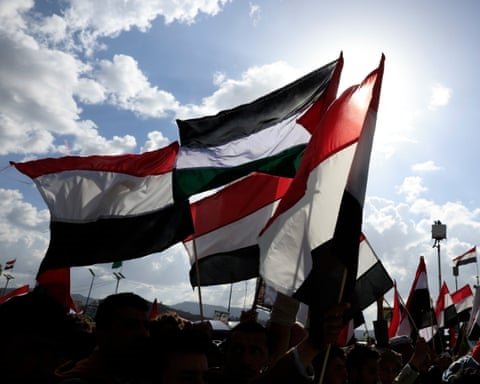
The head of Yemen’s Southern Transitional Council has declared that establishing separate northern and southern states represents the only viable path toward lasting stability, asserting that military campaigns have failed to dislodge Houthi control over the north.
In recent remarks during United Nations proceedings, the southern leader stated that the current territorial division reflects an irreversible reality. “The military and economic separation already exists on the ground,” he noted, advocating for formal recognition of two sovereign states through either referendum or mutual agreement.
Yemen’s historical division between north and south from 1967 until their 1990 unification has reemerged as a defining feature of the ongoing conflict. The situation escalated dramatically in 2014 when Houthi forces captured the capital, triggering a devastating civil war that displaced millions before a fragile ceasefire took effect in 2022.
International military interventions have proven ineffective in altering the fundamental power dynamics. Despite extensive aerial campaigns and recent intensified strikes, the Houthi leadership maintains firm control over northern territories while continuing maritime operations against international shipping.
The southern leader expressed frustration with the current political arrangement, describing the decision-making process as exclusionary. Recent administrative appointments made by southern authorities reflect growing impatience with power-sharing mechanisms that they claim have marginalized southern representation.
“These appointments fall within our legitimate political rights,” the southern official maintained, emphasizing the need for transparent governance structures. He acknowledged the challenge of maintaining public support while operating within a system he characterized as granting “responsibility without actual authority.”
Economic pressures compound the political stalemate, with southern regions struggling to export oil resources due to Houthi targeting of maritime traffic. This has exacerbated chronic issues including electricity shortages and unpaid public salaries, while some observers point to additional governance challenges affecting southern administration.
The international community continues to advocate for preserving Yemen’s territorial unity, though this position requires either military outcomes that appear increasingly unlikely or political negotiations that show little promise of materializing.
Southern officials contend that an independent southern state would possess the economic foundations for prosperity, including functional banking systems, oil reserves, and port infrastructure. They argue such an entity could enhance regional security by protecting vital shipping lanes and countering militant activities.