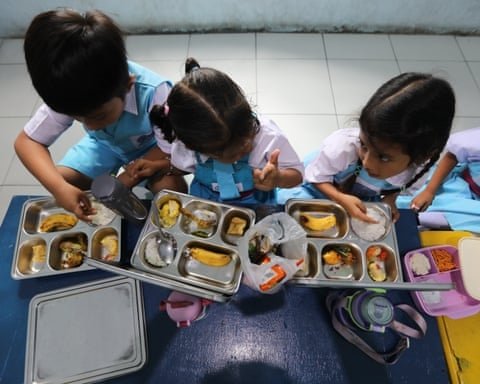
A major government initiative to provide free meals to millions of Indonesians is facing intense scrutiny following widespread reports of food poisoning. The ambitious program, a cornerstone of the current administration’s policy agenda, has been linked to thousands of illnesses, raising serious questions about its execution and oversight.
The program, which aims to deliver daily nutrition to tens of millions of school children, toddlers, and new mothers, has been marred by repeated health scares. Citizens have reported discovering maggots in food items, fragments of glass in rice, and have raised alarms over unsanitary food preparation practices. These incidents have sparked public protests and a flood of complaints on social media platforms.
Independent monitoring groups have documented over 15,000 cases of illness connected to the meals across the nation. In one region alone, more than 1,300 students fell ill in a single month, with similar outbreaks reported in other populous areas.
Health advocates have voiced grave concerns, warning that the drive to rapidly expand the program’s reach has compromised basic food safety standards. Experts point to the logistical challenge of operating massive central kitchens, with some facilities tasked with preparing thousands of meals at once, a scale they argue makes consistent quality control nearly impossible.
In response to growing public anger, officials have acknowledged shortcomings and pledged to implement stricter hygiene protocols. The national nutrition agency has temporarily shut down some kitchens for retraining and has stated its goal is to achieve “zero incidents.” A senior official admitted the program is “not perfect” but emphasized that improvements are continuously being made.
However, the agency’s official tally of confirmed poisoning cases remains significantly lower than the numbers reported by non-governmental organizations, leading to accusations that the problem is being understated.
Critics of the program argue that its massive budget, one of the largest in the nation’s history, is not backed by a sufficiently robust regulatory framework to ensure transparency and accountability. Some political analysts suggest the policy was rushed for political gain and has subsequently backfired, becoming a significant liability for the government.
Despite the controversies, some beneficiaries report positive experiences. School principals and recipients in certain areas have noted that the program provides crucial support for families grappling with high living costs, ensuring children receive at least one nutritious meal a day.
Yet, for many parents whose children have fallen ill, trust has been broken. The experience of seeing their children hospitalized after consuming the government-provided food has turned initial supporters into vocal critics, who now question whether the safety of the nation’s children is being prioritized.