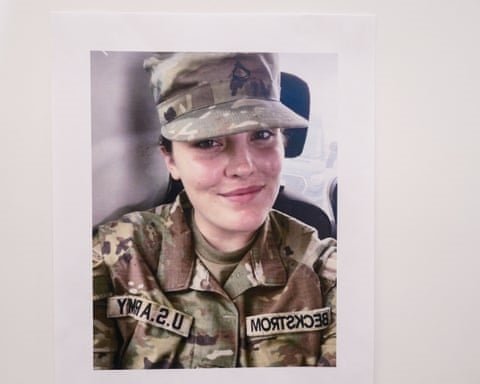
Law enforcement officers across multiple states are increasingly invoking victims’ rights legislation to shield their identities following violent incidents, including fatal shootings of civilians.
The legal strategy centers on Marsy’s Law, legislation enacted in twelve states that grants crime victims privacy protections. Police departments have successfully argued that officers become crime victims during confrontations, thereby qualifying for anonymity.
In Ohio, officer Connor Grubb sought protection under this provision after fatally shooting Ta’Kiya Young, who was pregnant, during a 2023 shoplifting investigation. Body camera footage showed Young’s vehicle moving slowly forward before Grubb fired through the windshield. Although courts ultimately rejected Grubb’s anonymity claim, the officer was acquitted of murder charges last month.
Similar cases have emerged nationwide. Florida authorities withheld names of officers who killed 20-year-old Jayden Baez outside a retail store, claiming he attempted to strike them with his vehicle. North and South Dakota law enforcement agencies have also employed the legal tactic.
Civil rights organizations contend the practice represents a fundamental misuse of legislation intended to protect civilian crime victims.
“The application of Marsy’s Law to police acting in their official capacity creates an imbalance where state agents appear to hold greater rights than the citizens affected by their actions,” said one advocacy group representative.
Legal experts echo these concerns, noting broader implications for police accountability and judicial transparency.
“This approach undermines due process and complicates oversight efforts,” stated a criminal justice professor. “When civilian review boards cannot access basic information about involved officers, meaningful investigation becomes impossible.”
Police organizations defend the practice as necessary protection against threats targeting law enforcement personnel.
“All crime victims, regardless of profession, deserve privacy safeguards,” countered a police union president. “The temporary anonymity provided during investigations helps ensure officer safety.”
Judicial responses have varied. While Florida’s Supreme Court has ruled the law doesn’t automatically authorize name suppression, Ohio’s court recently permitted identity protection for an officer injured during a bank robbery response.
The controversy highlights ongoing tensions between police transparency and officer protection, particularly following high-profile incidents where departments concealed identities without invoking Marsy’s Law. In Akron, eight officers who fired 46 rounds at unarmed Jayland Walker were never publicly identified.
For families of those killed in police encounters, the legal maneuvers reinforce perceptions of a system weighted against accountability.
“We need de-escalation protocols, not lethal force in minor theft situations,” declared an attorney representing Young’s family. “Two lives were lost—a mother and her unborn child who never saw this world.”