
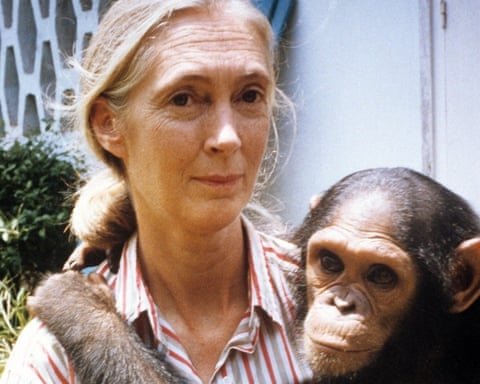
In late 1960, a young researcher in what is now Tanzania’s Gombe National Park documented behaviors that would fundamentally alter science’s view of our closest animal relatives. The researcher observed chimpanzees consuming meat, contradicting the long-held belief that they were exclusively vegetarian.
An even more significant observation followed. A chimpanzee was seen carefully modifying a grass stem before inserting it into a termite mound. This deliberate tool use, where the ape would extract protein-rich insects, demonstrated a level of cultural sophistication previously unrecognized in non-human species.
These groundbreaking discoveries launched a research program that would continue for more than a quarter-century, establishing the longest-running field study of its kind. The work revealed chimpanzees as complex beings with distinct personalities, emotional lives, and the capacity for planning and memory.
The researcher’s unconventional path to science began without a formal undergraduate degree, yet culminated in a doctorate from Cambridge University. Early publications brought international recognition, though some scientific contemporaries initially dismissed the findings as unscientific anecdote.
Professional recognition grew steadily despite early skepticism, with academic appointments at several prestigious institutions. The 1986 publication synthesizing decades of chimpanzee research prompted a sobering realization among primatologists about the species’ declining numbers across Africa.
This awareness prompted a career shift from pure research to global activism. The scientist dedicated subsequent decades to conservation efforts and environmental education through an institute that continues this work today.
The journey began with childhood dreams of living among African wildlife. After saving money from secretarial work, the researcher traveled to Kenya where a meeting with a prominent paleoanthropologist led to an improbable expedition into remote forest territory.
Accompanied by her mother due to colonial regulations prohibiting women from entering the forest alone, the researcher established camp in an area known for chimpanzee populations. What began as a short-term project evolved into a lifetime’s work that transformed our understanding of animal intelligence and behavior.
The legacy includes numerous honors, honorary degrees, and a knighthood recognition. Through both scientific discovery and conservation advocacy, this work forever changed humanity’s relationship with the natural world.