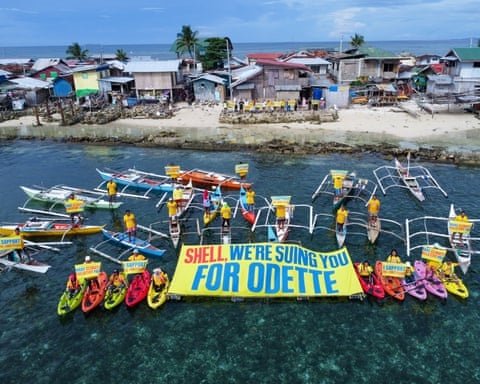
Survivors of a devastating typhoon in the Philippines are taking the oil giant Shell to court in the United Kingdom, in a landmark legal case that directly links a fossil fuel company’s emissions to the human cost of a specific climate disaster.
The lawsuit, filed by 67 individuals affected by Super Typhoon Rai in 2021, demands financial compensation for their losses. The typhoon, one of the most powerful to ever strike the nation, resulted in hundreds of fatalities, displaced millions, and obliterated over a million homes.
The legal claim asserts that Shell’s operations and its contribution to climate change intensified the storm’s destructive power. It argues the company breached the claimants’ constitutional rights to a healthy environment and engaged in activities that obscured climate science. The case is notable for focusing on harms that have already occurred, moving beyond litigation that typically addresses future climate risks.
One of the claimants, Trixy Elle, recounted the terror of the storm, which forced her family to flee their home in the dead of night. “We swam for our lives, holding hands,” she said. In the aftermath, her family struggled to survive, scavenging for food amidst the ruins. Years later, her children still hide in fear during thunderstorms.
The legal action is supported by scientific attribution studies concluding that human-caused climate change more than doubled the likelihood of such an extreme weather event. A spokesperson for Shell has previously rejected similar allegations, stating that the science of climate change has been publicly discussed for decades.
For the survivors, the lawsuit represents a fight for accountability. “My motivation is my children’s future,” Elle stated. “We are now fighting back.” The case is seen as a significant test of whether corporations can be held legally responsible for climate-related damages already inflicted on vulnerable communities.