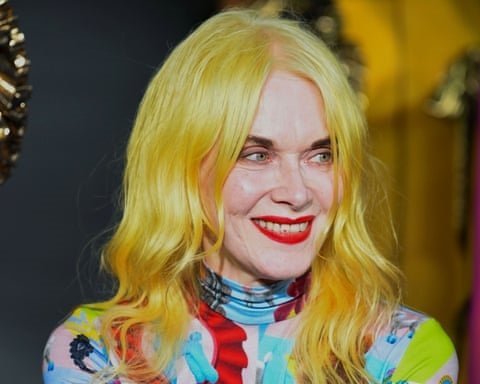
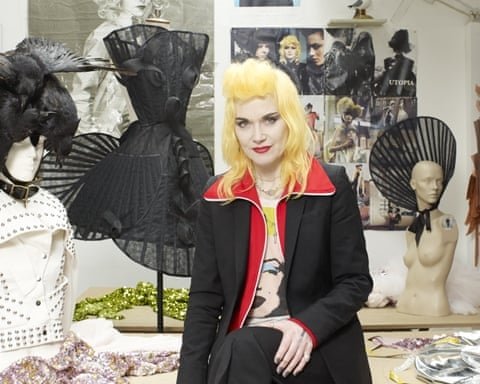
Pam Hogg remained a defiantly independent force in the fashion world, her entire career a testament to the raw, do-it-yourself spirit of the late 1970s and 80s art and music scenes. While the industry around her commercialized and transformed, she held fast to a belief in theatrical, painstakingly handcrafted garments that championed fierce individuality.
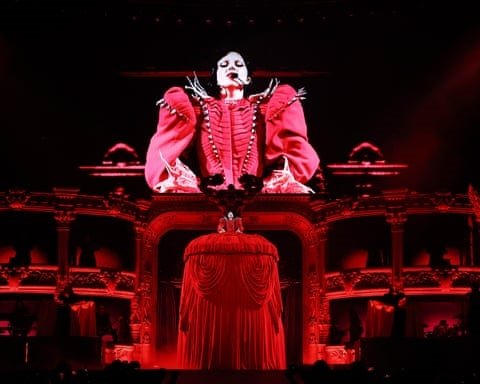
Her signature catsuits in latex and PVC became iconic stagewear, worn by a generation of music’s most influential figures from Debbie Harry and Siouxsie Sioux to Rihanna and Taylor Swift. These pieces never lost their edge; when a performer stepped into one, it signaled an event, a moment of high-voltage spectacle about to unfold.
Despite this acclaim, Hogg operated perpetually on the fringes of the financial mainstream. She aspired to the stability achieved by some of her peers but refused to compromise her anti-establishment philosophy to get there. Her presentations at major fashion weeks were often sewn with her own hands, initially in her kitchen and later in an east London studio. Lacking funds for a mannequin, she would frequently fit the collections on herself.
This financial constraint, however, fueled her creative ethos. She became a master of resourcefulness, famously creating pieces for a major museum exhibition from discarded curtains and plastic flowers sourced from junk shops. Her process was intensely physical and personal; the smudges on one celebrated wedding dress were, in fact, her own blood from needle pricks sustained during its creation.
Her artistic journey began in Scotland, where a difficult school experience gave way to the liberation of art school in Glasgow and later London. But her true education and career launch happened not in a lecture hall, but in the queue for London’s legendary Blitz club. The fiercely competitive dress code forced her to constantly innovate, sewing new, ever-more-outrageous outfits each week. This led to commissions from fellow clubbers and musicians, organically building her reputation.
After establishing a successful shop in Soho, Hogg made a surprising pivot, walking away from fashion for over a decade to pursue music. She toured with bands and even formed her own, supporting major acts before eventually returning to a changed fashion landscape.
Her comeback was marked by the same fervent dedication. She continued to create one-of-a-kind pieces for a loyal clientele of stars and models, with her work being acquired by national museums. Pam Hogg’s legacy is that of a true original—a designer who proved that profound influence and iconic status could be achieved without ever bowing to commercial pressures, remaining an artist first and foremost.