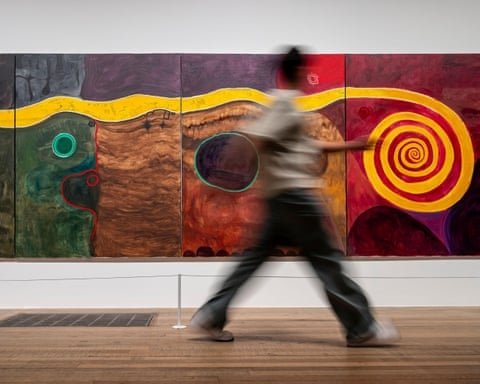
A landmark exhibition tracing Nigeria’s artistic evolution reveals how generations of creators forged a modern visual language while navigating colonialism, independence, and cultural heritage. The showcase presents works spanning from early colonial encounters through the nation-building decades, highlighting artists who redefined Nigerian identity through their practice.
The collection challenges conventional categorizations of African art, positioning these works firmly within global modernist movements rather than isolating them as traditional artifacts. Early pieces demonstrate how portraiture became a tool for establishing social hierarchies, with commissioned paintings signaling status within emerging urban elites. Yet parallel to this, other artists turned their attention to everyday life and indigenous mythology, creating visual records that countered colonial narratives.
Among the significant works featured are photographs documenting pivotal historical moments, including the aftermath of the Benin Kingdom’s dissolution. These images capture the complex interplay between traditional authority and colonial power structures. Similarly, intricate carvings depict encounters between local rulers and British officials, using traditional artistic forms to make pointed political commentary.
The exhibition prominently features mid-century artists who gained international recognition while grappling with Nigeria’s complex position within the Commonwealth. Their works range from vibrant depictions of cultural life to profound responses to national trauma, including the civil war period. Technical innovation characterizes much of this era, with artists developing distinctive approaches to capturing movement and emotion.
Alongside these established figures, the show highlights artistic collectives that emerged from academic institutions, advocating for decolonized art education and challenging nationalist orthodoxies. Their experimental approaches expanded the boundaries of Nigerian artistic expression.
The curation faced practical challenges, particularly in accessing privately held works and conserving fragile pieces. Collaboration with Nigerian cultural institutions proved crucial in preserving and presenting these important artifacts.
Beyond national boundaries, the exhibition positions Nigeria as a historical crossroads where diverse African and international influences converged. Artists from across West Africa and beyond participated in this cultural renaissance, making the story fundamentally regional in character while distinctly Nigerian in its particular concerns.
The presentation ultimately explores artistic independence as both political reality and creative philosophy. These works demonstrate how Nigerian artists selectively engaged with global movements while developing uniquely local expressions, creating a visual legacy that continues to inform contemporary practice. The exhibition aims to spark broader conversations about preserving cultural heritage and increasing public access to significant artistic collections.