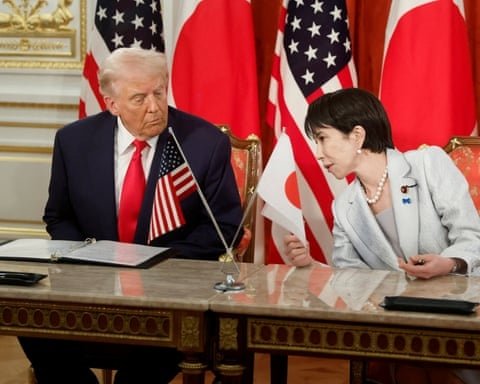
Japan’s recently appointed prime minister, Sanae Takaichi, is preparing for a pivotal meeting with U.S. President Donald Trump, in what observers see as a critical early test of her leadership. The discussions, set for Tokyo, are anticipated to address ongoing trade disputes and security cooperation between the two nations.
Takaichi, who recently became the country’s first female premier, leads a minority government that relies on support from opposition lawmakers to pass key legislation. This political reality adds urgency to her diplomatic efforts, particularly in managing relations with a key ally whose trade policies have created economic headwinds for Japan.
The talks come amid shared concerns over regional security challenges, with both nations wary of China’s expanding military presence. Takaichi has signaled commitment to strengthening Japan’s defense capabilities, recently accelerating plans to increase military spending to 2% of GDP. The government has also moved to acquire advanced missile systems and develop longer-range domestic weaponry.
However, tensions persist regarding the cost of maintaining U.S. forces in Japan, with Washington having previously suggested Tokyo should contribute more financially. While recent tariff reductions have provided some economic relief, further trade concessions are expected to be discussed, potentially involving increased Japanese purchases of American agricultural and energy products.
The personal dynamic between the leaders may prove significant. Takaichi’s political mentor, the late Shinzo Abe, maintained a strong rapport with the American president during his previous administration. Trump has publicly praised the new prime minister, noting her close association with his “favorite” Japanese leader.
The meeting represents an important opportunity for Takaichi to establish her international standing while navigating complex bilateral issues that have significant implications for Japan’s economy and security posture.