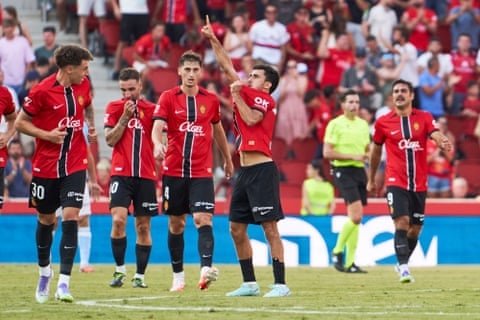
Andy Kohlberg, the American president of Real Mallorca, describes the experience of attending matches in Spain as a unique cultural shift. “Most owners I speak with say it’s the most stressful two hours of their week,” he notes with a laugh. “And they’re probably right.” This weekend, his team travels to face Real Madrid at the Santiago Bernabéu, a stadium where Mallorca last celebrated a victory in 2009.
The contrasts with American sports culture are stark. “In the NBA, you might exchange a brief handshake with an opposing owner, but you’d never share a meal or sit together during the game,” Kohlberg explains. “The idea that you must remain composed and not cheer openly for your own team is something that surprises many Americans. It’s a different approach to the emotional highs and lows of competition.”
Kohlberg’s own background is in professional tennis, where he competed internationally before retiring and building a senior living business. His entry into sports ownership came with the Phoenix Suns in 2004, followed by Mallorca in 2016 when the club was in the second division and facing significant challenges.
The journey hasn’t been without setbacks. Mallorca experienced relegation to the third tier in 2017 before achieving successive promotions to return to the top flight. Recent seasons have shown progress with an eighth-place finish in 2023, a tenth-place finish last season, and a Copa del Rey final appearance in 2024.
“What appeals to me are turnaround situations,” Kohlberg states. “The European model, with promotion and relegation, creates both opportunity and risk that doesn’t exist in American closed leagues. For a smaller club, there’s a pathway to growth, but also the reality that one difficult season can reverse that progress.”
He sees Mallorca’s location as particularly advantageous. “The island attracts millions of tourists annually while maintaining a strong local community. This creates a unique market potential that few other clubs can match.”
Under Kohlberg’s leadership, the club has focused on making the stadium a year-round destination rather than just a matchday venue. “It makes no sense to have a facility sit empty most of the year,” he argues. “We’re creating experiences that appeal to both traditional supporters and new visitors.”
The balance between sporting ambition and financial responsibility remains central to his approach. “In business, the primary goal is usually clear – generate profit. In sports, you have competing objectives: winning versus financial sustainability. Sometimes these goals conflict directly, requiring careful management.”
Kohlberg believes his athletic background gives him perspective that resonates with players and coaches. “Having competed professionally, I understand the pressure athletes face and the importance of maintaining focus. While statistical analysis has its place in modern sports, I’ve seen how over-reliance on data can sometimes hinder rather than help performance.”
As American investment in European football grows, Kohlberg sees it as a response to escalating valuations in U.S. sports. “When you see women’s franchises selling for hundreds of millions, European clubs start looking more reasonably priced by comparison.”
For Mallorca, the immediate challenge is maintaining their position as a consistent top-ten team while navigating the financial disparities within La Liga. “The gap between the largest clubs and the rest remains significant,” Kohlberg acknowledges. “Our focus is on sustainable growth and continuing to build a club that represents the entire island community.”
As for Saturday’s match at the Bernabéu, Kohlberg will maintain his composure regardless of the outcome, embodying the unique traditions of Spanish football ownership.