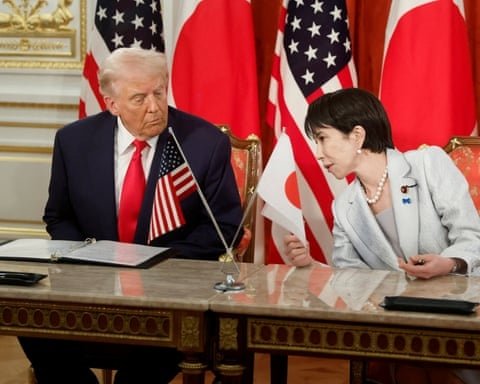

Japan’s newly elected prime minister faces a significant cultural decision regarding her potential participation in an upcoming sumo tournament ceremony. The nation’s first woman to hold the premiership must determine whether to challenge the sport’s longstanding prohibition against females entering the sacred wrestling ring.
The tradition-bound world of sumo wrestling maintains strict rules barring women from setting foot on the dohyo, the elevated clay platform where matches occur. This prohibition stems from Shinto religious beliefs regarding ritual purity. The prime minister’s office has offered ambiguous statements about whether the leader will attempt to present the winner’s trophy directly in the ring later this month, noting only that the government respects sumo traditions while considering an appropriate course of action.
This dilemma echoes previous controversies involving female officials. In the 1990s, Japan’s first female chief cabinet secretary was denied permission to present the prime minister’s cup in the ring. A decade later, a female Osaka governor was compelled to award a prize from the walkway adjacent to the ring after her requests to enter were rejected.
The issue gained renewed attention in 2018 when female spectators, including a nurse, entered the ring to administer emergency aid to a collapsed mayor. Tournament officials repeatedly demanded the women leave the sacred space, prompting widespread criticism and an eventual apology from sumo authorities. Days later, another female mayor was prevented from speaking from the ring before an exhibition tournament.
While amateur sumo allows female participants, professional sumo maintains its gender restrictions despite establishing an expert panel to examine the policy several years ago. The sport has recently experienced renewed popularity following successful tournaments domestically and internationally, alongside the emergence of new Japanese-born champions.
The prime minister’s decision carries substantial symbolic weight for gender equality advocates and could influence her political standing as she works to strengthen her party’s position. Her choice will inevitably be interpreted as either affirming traditional values or advancing women’s representation in Japanese society.