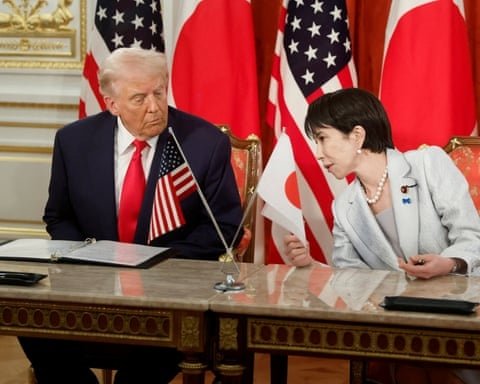
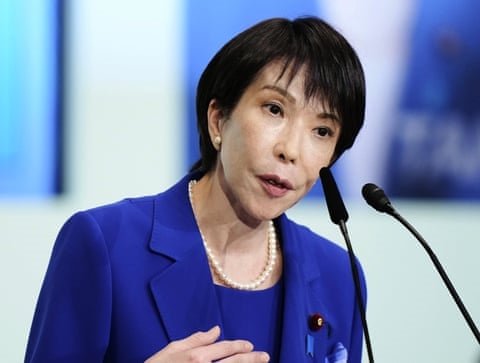
Sanae Takaichi has secured the leadership of Japan’s ruling party, positioning her to become the nation’s first female prime minister following a closely contested election. The 64-year-old conservative politician emerged victorious over moderate challenger Shinjiro Koizumi in a runoff vote held Saturday at party headquarters in Tokyo.
The leadership contest was triggered by outgoing Prime Minister Shigeru Ishiba’s decision to step down after just one year in office. Takaichi now takes charge of a party seeking to rebuild after recent electoral setbacks and ongoing challenges with public confidence.
“Together we have opened a new chapter for our party,” Takaichi stated after her 185-156 victory. “Rather than celebration, I feel the weight of coming challenges. We face substantial work ahead that requires our collective effort across all generations.”
In the initial voting round, Takaichi led with 183 votes from 589 total, while Koizumi followed with 164 votes. Three other candidates were eliminated before the final runoff, where parliamentary members’ votes carried greater weight than those of rank-and-file party members.
Takaichi’s expected confirmation as prime minister could come as early as October 15, given the ruling coalition’s parliamentary strength. Opposition parties would need unprecedented unity to block her appointment, a scenario political observers consider highly unlikely.
The new leader inherits multiple pressing issues, including party unification efforts and restoring voter trust after recent scandals. She must also address public concerns about immigration and tourism policies, having previously called for reconsidering admission policies for “people with completely different cultures and backgrounds.”
Her election marks a symbolic breakthrough in a nation that consistently ranks low in global gender equality measurements. However, Takaichi has historically opposed certain gender equality measures, including separate surnames for married couples and female succession to the imperial throne.
The leadership transition occurs amid regional security concerns, including shifting alliances in East Asia and evolving economic relations with the United States. The party itself faces internal rebuilding after recent election losses and a funding scandal affecting numerous lawmakers.
Saturday’s decision represents a pivotal moment for the long-dominant political organization, which has governed Japan for most of the past seven decades but now confronts significant challenges to its political standing.