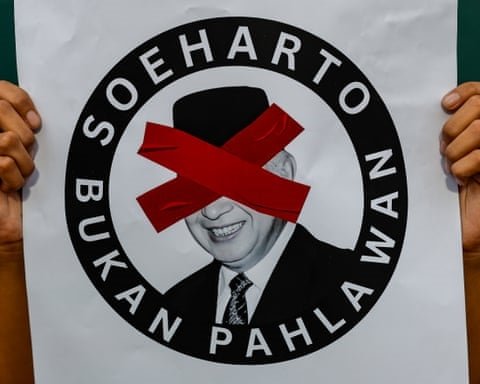
A decision to grant national hero status to Indonesia’s late authoritarian leader Suharto has revealed a generational divide in the world’s third-largest democracy. While activists and survivors of his regime have expressed outrage, many young Indonesians have responded with a mixture of indifference and nostalgia, a reaction that underscores a shift in national priorities.
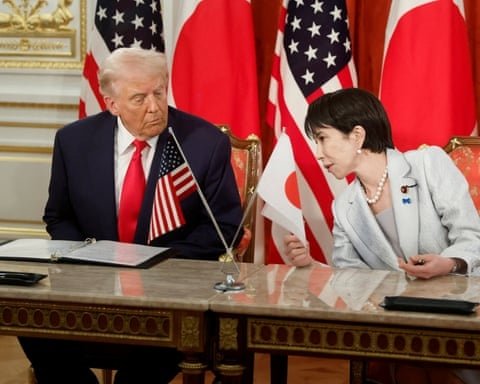
The award was conferred by President Prabowo Subianto, a former military general with close familial ties to the Suharto regime. Suharto, who ruled for over three decades until 1998, presided over a period marked by allegations of severe human rights abuses and corruption. The government’s official citation honors him as a “hero of the struggle for independence,” a claim that stands in stark contrast to the historical record of mass killings and political repression during his rule.
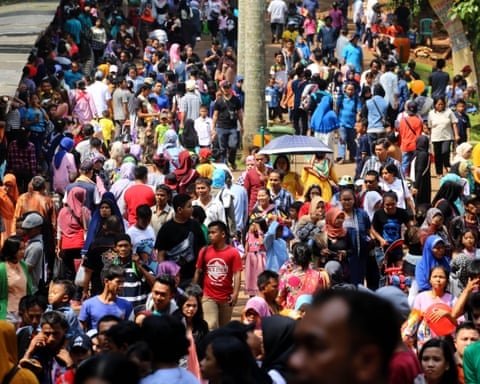
On university campuses and city streets, the controversy has failed to ignite widespread protest. For many in Generation Z, who were born after Suharto’s fall, the era is a distant chapter in a history book, not a lived experience. Their focus appears to be fixed on contemporary economic pressures, including a cost of living crisis and precarious employment, rather than on reckoning with the past.
“I understand the controversies, but his leadership also brought development,” remarked one university student, echoing a sentiment heard among peers. “Every leader has their strengths and weaknesses.”
This perspective aligns with a broader trend of romanticizing the Suharto period as a time of perceived stability and economic growth. Analysts note that for a generation grappling with modern uncertainties, the authoritarian past can appear deceptively orderly. Polling data suggests that younger Indonesians hold a more neutral or even positive view of the former strongman compared to some older demographics who directly experienced his rule.
Social scientists point to a large, pragmatic middle ground among the youth. For them, the political decision is seen as an elite-level dispute, far removed from the daily challenges of making a living. This complacency extends to the health of democracy itself, with research indicating that younger citizens report higher satisfaction with the democratic system even as its institutions are perceived to weaken.
The decision has, however, reopened old wounds for communities directly targeted by the former regime. A student from the Chinese-Indonesian community, which faced systemic discrimination under Suharto, called the move a painful dismissal of historical trauma. “There’s all this trauma, and the government still just closes their eyes,” he said.
Critics warn that this official rehabilitation, coupled with an education system that has long sanitized the darker aspects of the era, risks cementing a collective amnesia. With plans announced to revise the national history curriculum to foster a more “positive” narrative, scholars fear it will become increasingly difficult for future generations to access an unvarnished account of this complex period, allowing the legacy of a controversial strongman to be rewritten for a new age.