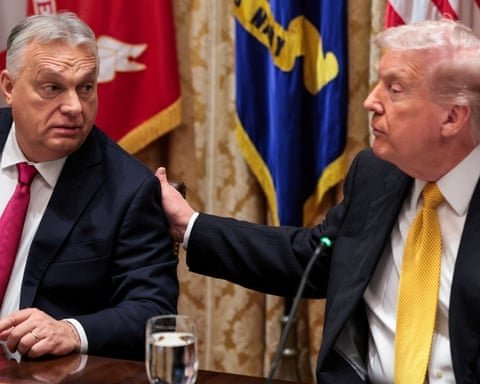
A recent meeting between the Hungarian Prime Minister and the U.S. President has resulted in conflicting narratives, with Budapest declaring a major diplomatic victory that Washington has since downplayed.
The Hungarian government announced it secured an indefinite exemption from American sanctions on Russian oil and gas, a move that would protect the country from rising energy costs. The Prime Minister framed the agreement as a personal success, directly linking its longevity to his own political survival, suggesting the deal would stand as long as both leaders remained in power.
However, the U.S. administration has presented a different account. Officials clarified that any understanding is merely a verbal agreement, with the exemption lasting for only one year, not indefinitely. A State Department official noted that no formal notification of an exemption has been issued, and discussions are ongoing.
Analysts suggest the Hungarian leader is leveraging the White House visit to bolster his political standing ahead of next year’s parliamentary elections. By presenting the deal as a triumph, he can claim credit for shielding Hungarian households from economic pressure.
The discrepancy highlights a pattern of ambiguity in international dealings. A source familiar with the matter described the outcomes of such meetings as potentially “performative,” designed for political effect rather than reflecting concrete policy.
Further complicating the picture, the U.S. has expressed reservations about Hungary’s continued close ties with Russia, a point of contention with other European allies. While the Hungarian government celebrates the arrangement, the opposition at home has questioned the cost, pointing to new commitments for purchasing American military supplies and natural gas.
The situation underscores the complex interplay between domestic politics and international diplomacy, where the perception of a win can sometimes be as valuable as the reality.