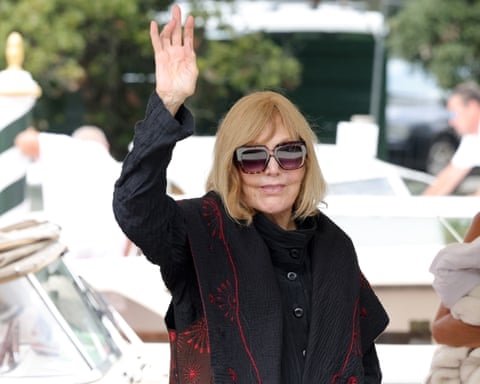
At 92, legendary actress Kim Novak is receiving a lifetime achievement award at the Venice Film Festival, a recognition she views as a tribute to her lifelong battle to remain authentic in an industry that sought to remake her.
In a rare interview, the star of cinematic classics reflected that this honor feels like a full-circle moment, celebrating not just her celebrated film roles but her steadfast refusal to be controlled by the Hollywood system. “I think I’m being honoured as much for being authentic as for my acting,” she remarked.
Novak’s most defining performance in Alfred Hitchcock’s “Vertigo” was deeply personal. She identified profoundly with her dual roles—the enigmatic Madeleine and the ordinary Judy—seeing in them a reflection of her own struggle against being molded into someone she was not. “They were both being told to change who they really were,” she recalled.
That struggle began the moment she was signed by Columbia Pictures. The studio head demanded she change her first name, lose weight, and alter her appearance. “They hired you because they thought you have something special, and then the first thing they’d do is try to give you a new face,” Novak said. She fought to retain her surname and, more importantly, her identity.
Despite the pressures, her career soared with films like “Picnic,” which earned her a Golden Globe, and musicals alongside Frank Sinatra. She found a creative sanctuary working with Hitchcock, who she said allowed her the freedom to build her character. Her collaboration with co-star James Stewart was equally rewarding, describing their dynamic as two “reactors” bouncing off each other.
Her personal life became as scrutinized as her films. A heavily publicized romance with Sinatra and a clandestine relationship with Sammy Davis Jr. were fodder for the gossip columns. The latter was forcibly ended by the studio head, who threatened Davis. A new film is set to dramatize that relationship, though Novak takes issue with its title, “Scandalous!,” insisting their connection was based on mutual understanding, not scandal.
Weary of the industry’s relentless pressure, Novak left Hollywood in the 1960s, a decision solidified after natural disasters destroyed her California home. She relocated to Oregon, married a veterinarian, and returned to her first love: painting. This artistic pursuit became a lifeline, especially following her husband’s recent death and through her own mental health journey.
A brief return to the spotlight for the 2014 Oscars resulted in cruel public commentary about her appearance, which she confronted by speaking out against bullying. This instinct to challenge injustice has been a constant, from creating her own production company to striking for equal pay decades ago.
When asked about progress for women in Hollywood, she offered a sobering perspective. “We make progress, but unfortunately then we always go back,” she stated, noting that an overemphasis on appearance persists, now amplified by social media and artificial intelligence.
After a long journey, Novak says she has finally found herself. “I’m proud that I held on to what’s important,” she affirmed. Her hope for her legacy is simple: “I would like them to think that I was true to myself. That I kept my standards high and lived by them.”