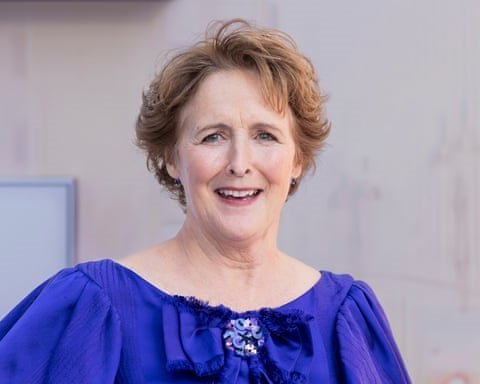
Fiona Shaw, the celebrated actor known for her commanding presence across stage and screen, recently offered a rare glimpse into her artistic process and the philosophy that guides her work. In a wide-ranging discussion, she touched upon everything from the hidden poetry in scripts to the unique challenges of embodying complex characters.
Shaw revealed that her approach to any role begins with the language itself. “The clues to everything are there in the choice of words,” she explained, describing how she searches for what she calls the “plumb line”—a single, resonant line of dialogue that becomes the key to unlocking the entire character. She believes that at moments of great intensity, language becomes poetic, reaching for very old words to express fundamental truths.
This meticulous attention to text was evident in her preparation for the Jane Austen adaptation Persuasion nearly three decades ago. The director’s vision required deep immersion, leading Shaw to research maritime life to understand the world beyond Austen’s pages. This background work informed her portrayal of Mrs. Croft, a woman who defied convention by joining her husband at sea. Shaw reflected on the character’s unique pursuit of happiness in an era where such a choice was extraordinary, noting she “would have seen terrible things” but lived a far more interesting life.
Her process, however, is never the same twice. She described finding her way into a character through various doors: sometimes through the costume, sometimes through worrying about it all night, and sometimes by simply abandoning herself to the role. She admitted that some of her most difficult parts were those with no humour, like Electra, or those that felt uncomfortably close to herself.
This versatility allows her to move seamlessly between genres. Shaw sees comedy as a “rupturing of the norm,” a difficult art that requires perfect timing. She confessed to sleeping poorly the night before a comedy performance, anxious about “catching the wave” to ensure the moment lands correctly. In her view, the core difference between comedy and tragedy is one of agency: in comedy, characters override their circumstances, while in tragedy, they are overpowered by them.
Perhaps the most illuminating insight was her perspective on playing unsympathetic roles. Discussing a recent character who is “corrosive” to her daughter, Shaw emphasized that an actor can never judge the person they are portraying. “All she knows is that she wants to get better. She’s benign and blind,” Shaw said of the character. “Perhaps that’s what most of us are.”
Despite often being cast as intimidating figures, Shaw laughingly dismissed the idea that she is scary in real life. “I’m so not scary,” she insisted, suggesting that playing highly intelligent, organized characters might be “redemptive” for someone who can be “quite scatty.”
From working with the unconventional Terrence Malick—who offered the unique choice of performing a scene “indoors or outdoors”—to the communal bonding of a years-long international tour of Medea, Shaw’s career is a testament to a deep and enduring commitment to the collaborative, and often mysterious, art of storytelling.