The Democratic Republic of Congo has sharply criticized the European Union for what it terms a contradictory approach to international conflicts, arguing that Brussels applies stricter measures against Russia over Ukraine while maintaining economic partnerships with Rwanda despite its alleged involvement in Congo’s internal strife.
Foreign Minister Thérèse Kayikwamba Wagner characterized the EU’s response to territorial violations in eastern Congo as “markedly restrained.” She pointed to the extensive sanctions imposed on Moscow following its invasion of Ukraine, contrasting them with the limited actions taken regarding Rwanda’s alleged support for armed groups in Congo. “This disparity naturally raises questions about the consistency of the EU’s foreign policy,” she stated.
A peace agreement mediated by the United States and Qatar was signed in June between the neighboring nations, aiming to resolve a conflict that intensified earlier this year when the M23 rebel faction, allegedly backed by Kigali, captured significant territory. However, violence against civilians has persisted, and a key deadline for finalizing a peace settlement passed in August without resolution.
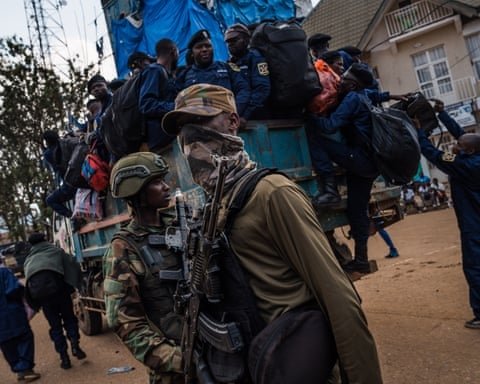
A recent United Nations report indicated that thousands of Rwandan troops have been operating alongside M23 rebels, with the Rwandan military exerting direct control over the group’s activities—an allegation Rwanda has consistently denied, maintaining its actions are defensive.
At a recent diplomatic gathering in Brussels, Congolese President Félix Tshisekedi publicly urged his Rwandan counterpart to cease support for militant factions, a request met with a swift rebuttal from Kigali, which labeled his assessment of the conflict’s origins as “fundamentally incorrect.”
Minister Wagner highlighted the EU’s imposition of sanctions on over thirty individuals and two entities linked to the conflict, including a militant organization and a gold refinery implicated in illicit mineral trading. The EU’s official justification cited territorial violations by Rwandan forces and documented human rights abuses.
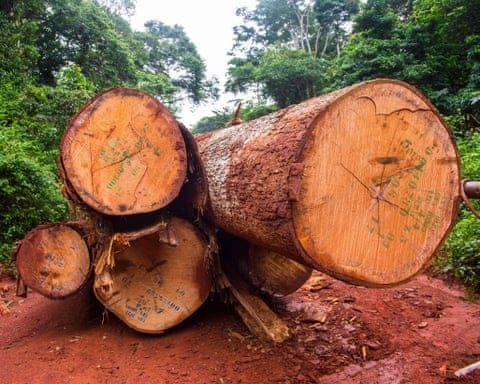
Despite these findings, the European Commission has declined to suspend a recently established minerals partnership with Rwanda, an agreement designed to secure raw materials essential for European electric vehicle batteries and semiconductor manufacturing. Wagner questioned the credibility of such an agreement, noting established reports of Rwandan exploitation of Congolese mineral resources, often extracted under coercive conditions involving child labor.
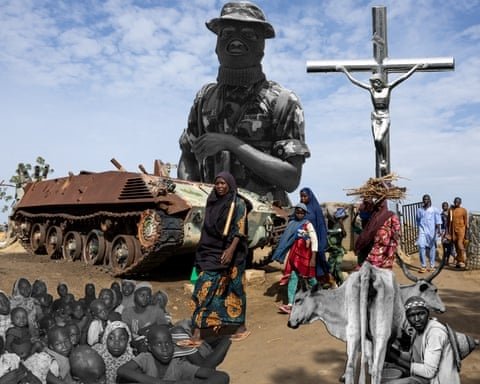
The conflict in eastern Congo, a mineral-rich region plagued by violence for over thirty years, remains one of the world’s most severe humanitarian emergencies. UN data records over a thousand conflict-related deaths in recent months, with millions displaced and facing acute food shortages.
While in Brussels for a conference on international infrastructure investment, Wagner acknowledged collaborative potential with the EU on development projects but emphasized that the ongoing crisis in eastern Congo continues to overshadow broader diplomatic and economic relations.