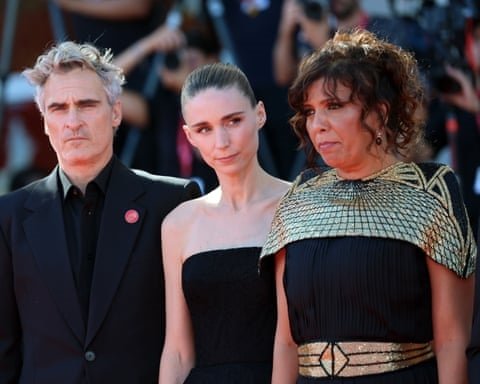
While celebrity appearances and red carpets maintained their traditional glamour at the Venice Film Festival, the event’s cinematic selections delivered a sobering focus on contemporary global turmoil. This year’s prominent films repeatedly turned their lens toward urgent political and social crises, positioning cinema as a medium for interpreting a chaotic world.
Two of the festival’s most discussed productions were tense, real-time narratives directed by women that tackled subjects many find difficult to confront. Kaouther Ben Hania’s “The Voice of Hind Rajab” reconstructs the final hours of a five-year-old Palestinian girl trapped in a vehicle after Israeli military action killed her family members. The film incorporates actual emergency call recordings, concluding with the destruction of the ambulance dispatched to rescue her. The screening concluded with prolonged applause and vocal demonstrations of solidarity.
Simultaneously, Kathryn Bigelow returned to directing with “A House of Dynamite,” which repeatedly depicts the eighteen-minute sequence from nuclear launch to impact from multiple perspectives. The filmmaker described the project as an urgent attempt to revitalize dialogue about nuclear disarmament, questioning the logic of global annihilation as defensive strategy.
Other notable works continued this trend of cinematic engagement with contemporary anxieties. Yorgos Lanthimos presented “Bugonia,” featuring Emma Stone as a corporate executive targeted by conspiracy theorists who believe her to be an extraterrestrial threat. The director framed this narrative as a climate crisis allegory, warning that humanity faces imminent reckoning and must choose its path carefully.
Park Chan-wook’s “No Other Choice” offered satire about employment insecurity in modern capitalism, while multiple productions engaged with artificial intelligence ethics and contemporary political leadership. An Olivier Assayas film examined the formation of modern politics through the rise of Vladimir Putin, with the director openly acknowledging its political dimensions.
This inclination toward direct political commentary appears to be expanding beyond Venice. Recent statements from other European festival organizers and unexpected political declarations from actors on red carpets suggest the film industry’s engagement with global crises is intensifying rather than diminishing.