The upcoming Ashes series will see an Australian squad, long defined by its veteran core, suddenly confronting the reality of transition. This shift has been accelerated not by long-term planning, but by a cascade of injuries to key players on the eve of the contest.
For years, the advanced age of the national side, particularly its celebrated bowling unit, has been a topic of discussion. It is rare for a Test team to feature nearly every player over the age of 30, with only a couple of notable exceptions. Yet, this experience was widely viewed as an asset. A four-pronged attack boasting a combined tally of over 1,500 Test wickets represents a formidable advantage, the logical peak of long and successful careers.
The conversation around age was amplified by the fact that the primary backup bowlers were also in their 30s. Promising younger talents have occasionally entered the squad, only to be sidelined for extended periods by injury, preventing the establishment of a clear succession plan. This, however, had not previously been a pressing issue. The established group, supplemented by a reliable veteran reserve, continued to perform, keeping the notion of a necessary transition a distant, theoretical concern.
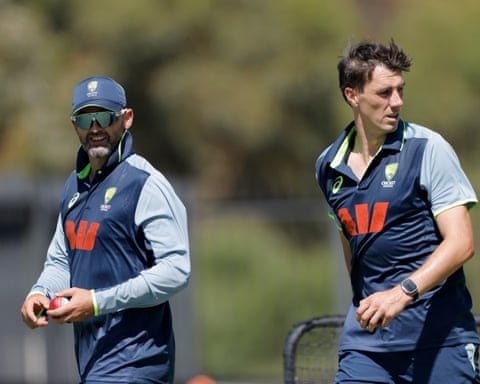
That theory has now become an urgent reality. A back injury to captain Pat Cummins was initially met with calm assurance, with expectations he would only miss the opening Test. His role, it was reasoned, could be capably filled. However, the subsequent loss of Josh Hazlewood to a hamstring strain has fundamentally altered the team’s balance. Losing one tight-line right-armer is manageable; losing both simultaneously disrupts the entire bowling dynamic. The control they provide is what allows the attacking prowess of Mitchell Starc to be deployed so effectively.
This forces a significant reshuffle. Scott Boland, so often a devastating first-change bowler, will likely be thrust into a new-ball role. The call-up of Brendan Doggett, while a 31-year-old with first-class experience, presents a considerable challenge. Making a debut in the cauldron of a packed Ashes opener, against a vocal travelling support, is a daunting prospect for any cricketer, regardless of their temperament.
The situation now is one of pronounced uncertainty. The assured combination of Starc, Nathan Lyon, Cummins, and Hazlewood has been abruptly replaced by a lineup with significant question marks. The durability of returning players is also a concern, with the tricky nature of stress fractures and a history of niggles becoming more serious layoffs.
While the latter part of the series could still see the primary attack reunited, the door has been opened for a transition that many expected was years away. The established next-in-line options are either untested at this level or returning from injury themselves. Beyond them lies a pool of genuine unknowns. This sudden shift creates a clear opportunity for the visiting English side, as a long-anticipated changing of the guard appears to be arriving ahead of schedule.