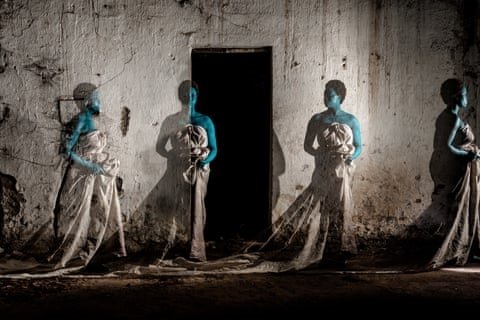
A Ugandan artist has created a photographic series that examines the historical connection between indigo dye and the transatlantic slave trade, while simultaneously documenting her personal journey through emotional recovery.
The project, titled “Indigogo,” emerged during a period of personal transition for the artist following the end of a significant relationship. During this time, solitary walks through Kampala became a source of solace. The discovery of an abandoned warehouse in the city center provided an unexpected sanctuary—its isolated, empty rooms mirroring her internal state and offering a space for emotional release.
The conceptual foundation for the work was laid during an artist residency in Indiana, where research into local history uncovered the disturbing economic realities of the slave era. The artist learned that indigo dye, a valuable commodity at the time, was sometimes used as a currency to purchase human lives. This revelation sparked a powerful visual exploration of how enslaved individuals were commodified, their identities erased and replaced by the value of a material substance.
Using her own body as the subject, the artist employed long-exposure photography to create the haunting images. The series was shot at night inside the warehouse to control the challenging light conditions. A pervasive blue tone throughout the work serves as a direct reference to the indigo dye that inspired it.
While the project delves into profound historical injustice concerning the Black body, it also functions as an intimate self-portrait. The artist describes the series as a means of documenting her personal evolution as a Black woman during a transformative period. Reflecting on the completed work, she expresses a sense of gratitude for the creative process, which she credits with fostering personal resilience and a changed perspective on life.