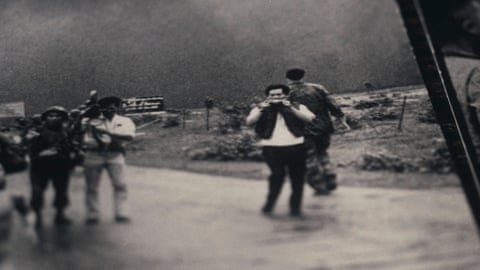

Director Theo Montoya has crafted a haunting cinematic elegy from the remnants of an abandoned film project, creating what might be described as a phantom documentary. The work serves as both memorial and protest, weaving together dystopian fiction with stark reality in Colombia’s second city.
The film emerges from tragedy—eight of the LGBTQ+ individuals featured in the original footage have since died, their losses attributed to the lingering social violence that permeates Medellín despite the passing of the cartel era. Montoya himself delivers portions of the narration from within a coffin, establishing the work’s funereal tone from the outset.
At its core lies the story of an unfinished horror film set in a dystopian Medovalín where spectral figures roam the streets. These red-eyed phantoms, products of overcrowded cemeteries, engage in relationships with the living—a phenomenon the film terms “spectrophilia.” This supernatural premise serves as metaphorical commentary on the discrimination faced by the city’s queer community.
Montoya blends multiple elements: audition tapes from his original casting process, intimate interviews with friends, euphoric goth club sequences, and striking urban landscapes that transform Medellín into something otherworldly. The director describes his approach as creating a “cinema of unbelievers,” drawing inspiration from Colombian neorealist traditions while pushing toward more transgressive territory.
The film’s emotional center rests heavily on Camilo, a 21-year-old originally cast as the lead, whose gentle nihilism provides a poignant throughline. His presence underscores the film’s exploration of a generation grappling with limited futures, where simply enduring the present becomes an act of resistance.
While the blending of reality and fiction proves effective, questions remain about the feasibility of the radical alternatives Montoya envisions. Many expressed aspirations—such as one subject’s declaration of wanting to be “Hollywood’s bitch”—reveal the tension between revolutionary ideals and mundane desires. The film ultimately stands as a passionate attempt to carve out space for imagination and survival in a landscape where both remain contested.