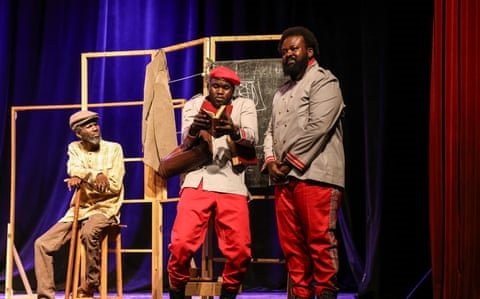
A celebrated Irish play exploring themes of colonialism and identity is resonating deeply in Senegal, where a local production is drawing powerful parallels to the West African nation’s own history and ongoing cultural evolution.
Brian Friel’s “Translations,” set in 1833 Ireland, depicts British soldiers tasked with anglicizing Gaelic place names, a process that becomes a poignant examination of power, language, and cultural erosion. In a Dakar theater, this narrative is now being brought to life by a Senegalese cast performing in French, with traditional Irish music accompanied by the sounds of the Fula flute.
For the actors, the story hits close to home. Many expressed surprise at learning that Ireland, a European nation, also endured colonization. The play’s themes feel strikingly relevant in a region where nations are increasingly re-evaluating ties to former colonial powers. Recent political shifts in Senegal and neighboring countries have seen a move toward greater sovereignty, including the closure of foreign military bases.
The production also highlights linguistic tensions familiar to Senegalese audiences. While French remains an official language, Wolof is the most widely spoken tongue and a cornerstone of national identity. Several cast members recounted being educated exclusively in French during their youth, with local languages often discouraged in school settings—a reality that mirrors the play’s conflict over language imposition.
In one pivotal scene, characters debate the renaming of Irish landmarks, a process that echoes ongoing efforts in Senegal to reclaim public spaces. Activists in Dakar are campaigning to replace colonial-era street names, arguing that such symbols perpetuate a painful legacy. One advocate questioned whether citizens would accept honoring historical figures responsible for brutal military campaigns if they were fully aware of their actions.
The emotional core of the play—a complex relationship between a British soldier and an Irish woman—also reflects nuanced post-colonial realities. For one actress, the role recalled stories from her hometown of Saint-Louis, where historical relationships between Senegalese women and European colonizers left a complicated social legacy.
Scholars note that the play resists simplistic interpretations of colonialism, instead portraying a reality where coercion coexists with personal choice, and tradition clashes with the allure of modernity. This layered perspective is finding a receptive audience in West Africa, proving that the themes of cultural preservation and self-determination transcend geography.