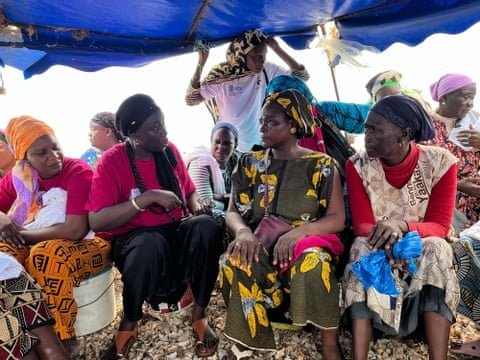
In the coastal town of Joal, the rhythm of life is dictated by the sea. When storms prevent fishermen from launching their wooden pirogues, an economic paralysis sets in. For the women here, this precarious existence is compounded by another, more intimate struggle: securing access to basic reproductive healthcare.
A quiet crisis is unfolding as international aid for family planning programs faces significant reductions. For many women, these services are not a mere convenience but a critical tool for survival, allowing them to space pregnancies, safeguard their health, and pursue economic stability.
At a local health clinic, a sense of urgency fills the corridors. A visiting medical team provides a rare opportunity for women to receive contraceptive care. Options like intrauterine devices, colloquially called “appareils,” are passed hand-to-hand, offering protection for years. The demand is high, but the infrastructure is fragile. The clinic itself is dilapidated, with buckets placed to catch rainwater from leaky roofs, and it often suffers from power outages.
The economic pressures are immense. With fish stocks declining, household incomes are shrinking. Many families have shifted from two meals a day to one, often relying on a simple millet porridge. In this context, the ability to plan a family becomes directly linked to a woman’s capacity to work and contribute financially.
“The women here are resilient, but the challenges are growing,” notes a local midwife with nearly a decade of service. She observes that women in the community often experience numerous pregnancies, leading to severe health complications like anaemia. With abortion illegal, unsafe procedures remain a dangerous, widespread alternative.
The work of providing contraception often falls to trusted community advocates who go door-to-door, discussing the benefits of family planning with women and their husbands. They note a cultural shift underway; as economic realities bite, the traditional expectation for women to have as many children as possible is being questioned.
The impact of aid cuts is already being felt on the ground. A key contraceptive implant is now out of stock in government pharmacies, forcing health workers to scavenge for remaining supplies from local clinics. A major British-funded program, which previously reached millions of women across several African nations, has seen its budget slashed and its reach dramatically reduced.
National health officials acknowledge the ambition to drastically increase the number of women using modern contraception, but stress that such goals are unattainable without sustained international partnership. They emphasize that this is fundamentally an issue of saving lives and empowering women to build a secure future for their families.
For the women of Joal, access to contraception is a cornerstone of their resilience. It provides the rare chance to make a decision about their own bodies and lives—a necessity, not a luxury, that is now under threat.