A new historical work offers a provocative reassessment of one of Africa’s most notorious figures, arguing that his legacy is more complex than commonly understood. The book, a hybrid of history and memoir, presents a revisionist take on modern Ugandan history, challenging long-held narratives about its post-colonial development.
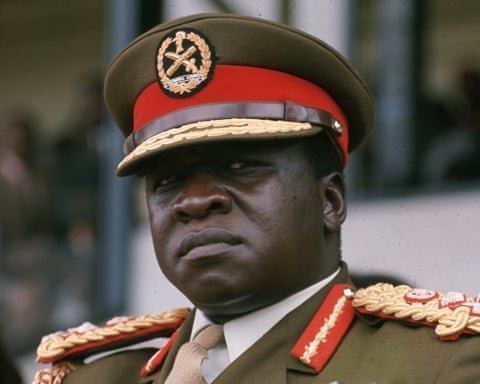
The author, a prominent academic, draws from his own life experience of exile following the mass expulsion of the South Asian community from Uganda in the 1970s. Despite this personal history, he attempts to reframe the dictator, Idi Amin, not merely as a brutal strongman but as an anti-colonial figure. The central argument posits that Amin’s actions, including the expulsion, were primarily aimed at dismantling British colonial structures rather than targeting a specific ethnic group.
This perspective directly confronts the conventional portrayal of Amin, which focuses on his military dictatorship and the hundreds of thousands of deaths that occurred under his rule. The author suggests that Western media preconceptions have overshadowed Amin’s role in making Black political power tangible and in breaking from former colonial masters.
The narrative extends its critique to Uganda’s subsequent leader, Yoweri Museveni, who is traditionally credited with stabilizing the nation. The book contends that while Museveni oversaw economic growth, he also revived divisive tribal politics and capitulated to Western neoliberal demands, contrasting him with Amin’s defiant nationalism.
The work characterizes some of Amin’s most bizarre public spectacles—such as declaring himself the King of Scotland—as a form of radical political theater designed to mock former colonial powers. This interpretation is likely to be a point of significant debate among readers and historians.
Ultimately, the book forces a difficult conversation about the metrics used to judge post-colonial leaders and the messy, often paradoxical, process of nation-building after independence. It presents a portrait of a leader who, given the opportunity to construct a nation, ultimately engaged in its destabilization.