Mona Fastvold’s latest cinematic work presents a challenging and often perplexing look at Ann Lee, the 18th-century religious leader who founded the Shaker movement. Amanda Seyfried portrays Lee, a woman who faced persecution in England before bringing her radical beliefs to pre-revolutionary America.
The film follows Lee as she establishes a religious community, grappling with opposition not only for her faith but also for her gender and pacifist stance. Seyfried is joined by Lewis Pullman as her brother and Christopher Abbott as her husband, whose marital dynamics introduce a layer of complexity to the narrative.
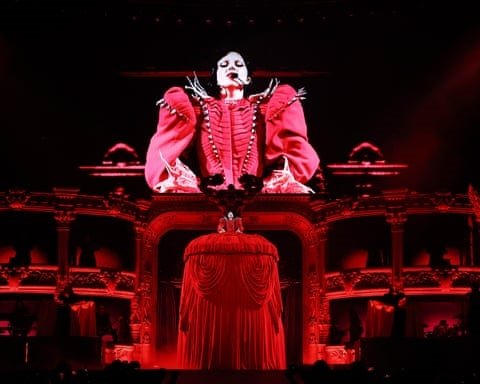
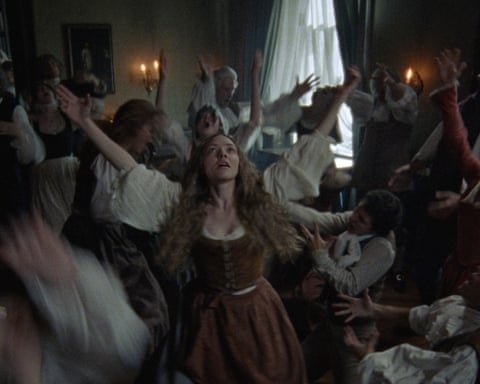
Stylistically, the movie shifts between tones, at moments evoking the stark intensity of European art-house cinema and at others resembling a stylized theatrical production. The ecstatic, trembling dances of Lee’s followers are presented with a choreographed intensity that walks a fine line between spiritual expression and collective fervor.
Central to the story is Lee’s doctrine, which condemned physical intimacy as a distraction from divine devotion. The film does not shy away from the inherent contradictions of such a belief system, yet it refrains from offering easy judgments. Instead, it invites viewers to consider how such rigid convictions could fuel a movement capable of crossing an ocean and influencing a budding nation.
While Lee is shown decrying injustice in the New World—such as confronting a slave auction—the film subtly underscores the limits of her activism, leaving room for interpretation about her legacy.
Ultimately, this is an elusive and atmospheric piece, one that resists clear categorization. It employs irony and distance while simultaneously asking for empathy toward its controversial protagonist. Fastvold has crafted a film that refuses to provide all the answers, leaving each viewer to draw their own conclusions about faith, repression, and the force of conviction.