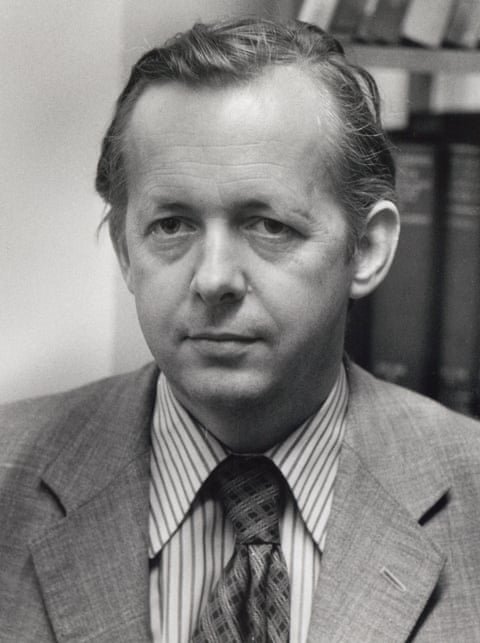
The world of foreign correspondence has lost one of its most formidable figures. David Hirst, a journalist whose career spanned four pivotal decades, has passed away at the age of 89. His reporting from the heart of the Middle East provided an indispensable guide through the region’s most turbulent periods, from the 1967 Arab-Israeli war to the complex peace efforts of the 1990s.
Hirst’s work was defined by its intellectual rigor and a refusal to shy away from difficult truths. His seminal 1977 book, an exhaustive history of the Arab-Israeli conflict, was met with fierce criticism from some quarters, which only underscored its challenging and uncompromising nature. His commitment to dispassionate analysis frequently put him at odds with the powers that be, leading to his periodic exclusion from several Arab nations following his unsparing critiques of their governments.
He was on the ground to document the horrific aftermath of the 1982 assault on the Syrian city of Hama, a report that laid bare the profound crises within the Arab political order. His assessments of regional leaders were equally unflinching. He dissected the leadership of Yasser Arafat with surgical precision, detailing a mix of personal bravery and deeply flawed administrative habits. Similarly, his obituary for Saddam Hussein framed the dictator not as a uniquely monstrous figure, but as a devastatingly effective and derivative despot, a case study in the brutal mechanics of total power.
Colleagues recall a man whose serious approach to journalism was matched by a formidable presence. Despite a physically unassuming demeanor, his quiet authority could silence a room of seasoned reporters. He was known for his intense dedication to his craft, famously clashing with editors over what he considered unrealistic deadlines, insisting that substantial analysis required substantial time. This academic thoroughness was a hallmark of his work.
His life in Beirut, his base for many years, was not without peril. He narrowly escaped two kidnapping attempts, with his cool-headedness in one instance allowing him to leap from a moving car and flee to safety. He later reflected that for years, he believed a fellow journalist with the same initials may have been assassinated in his place, a chilling reminder of the dangers he faced.
Born in England, Hirst’s connection to the Middle East was forged early through national service and later academic study in Beirut, where he achieved fluency in Arabic. This deep cultural and linguistic immersion informed a career that began in 1964 and produced a body of work that remains a critical resource for understanding the region’s enduring conflicts.
Even in his final years in France, he remained intellectually engaged, following events with a sharp eye. His last professional regret was being unable to complete a final update to his defining work on the Middle East, a testament to a mind that never ceased its pursuit of understanding. He is survived by his wife, Amina, his sister, and his brother.