Kathryn Bigelow confronts the unthinkable in her latest film, stripping away the layers of political satire and absurdism that have long shielded audiences from the raw reality of nuclear conflict. This is not a distant allegory or a dark comedy—it is a meticulously crafted procedural that unfolds in the tense, ticking minutes between a missile’s launch and its potential impact.
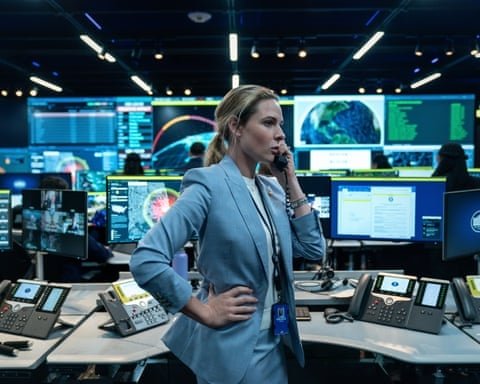
The story unfolds over a single 18-minute window, repeated from multiple perspectives as military and political figures scramble to respond to an unexpected nuclear launch from the Pacific, headed toward Chicago. The narrative structure creates a relentless countdown, immersing viewers in the high-stakes environment of situation rooms and command centers where every second counts.
Idris Elba portrays an American president caught in a catastrophic moment during a public appearance, while Rebecca Ferguson plays an intelligence analyst racing against time. They are joined by a military chief advocating for immediate retaliation, a defense secretary with personal ties to the target city, and a young NSA adviser grappling with the weight of impossible decisions.
What sets the film apart is its focus on the terrifying ambiguity of modern warfare. The central horror lies not in the missile itself, but in the chaos of not knowing who launched it, why, or how to respond without triggering global annihilation. The film suggests that the old rules of mutually assured destruction no longer apply in an era where attacks can emerge from shadows rather than clear adversaries.
Throughout the tense proceedings, Bigelow masterfully captures the surreal transition from normalcy to crisis—news tickers about everyday concerns still scrolling alongside apocalyptic warnings, creating a jarring contrast between the world that was and the world that might soon vanish.
While the film’s theatricality might seem heightened at moments, this stylistic choice effectively mirrors the surreal experience of those in power suddenly facing a scenario they were meant to prevent. They become actors in a play whose script has failed, confronting choices no amount of preparation could truly ready them to make.
This is cinema as confrontation—a stark reminder that some nightmares require us to keep our eyes open, no matter how blinding the glare.