A new documentary sheds light on the final years of the influential Italian director Roberto Rossellini, piecing together a portrait of a man who was not only a cinematic pioneer but also a devoted, if complex, father. His daughter, Isabella Rossellini, offers personal reflections on a childhood shaped by both public scandal and private tenderness.
Rossellini’s sudden death in 1977 came shortly after he presided over the Cannes film festival jury. For his daughter, then in her twenties, the loss was profound. She recalls her mother, actress Ingrid Bergman, remarking that he left them “as quickly as he drove his Ferrari.”
The documentary, “Living Without a Script,” premiering in Rome, explores this period of his life. It portrays a man in constant motion, fascinated by subjects far beyond cinema, from race cars and science to the then-nascent medium of television, which he championed when many of his peers dismissed it.
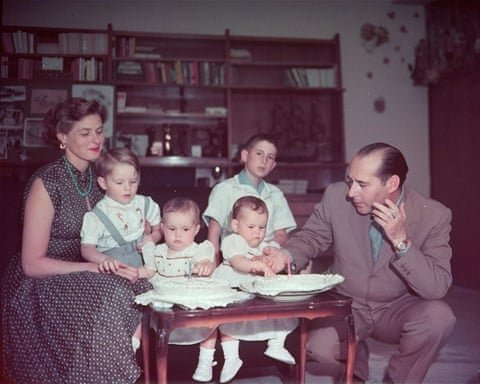
The family’s life was, however, indelibly marked by the international uproar that followed her parents’ relationship, which began when both were married to other people. The affair, which started on the set of their 1950 film “Stromboli,” led to Bergman’s pregnancy and a media firestorm that saw her effectively exiled from Hollywood and denounced in the U.S. Senate.
Despite the turmoil, Isabella Rossellini firmly rejects any notion that her father was absent. She describes a childhood where summer holidays on the Amalfi Coast were a bustling, joyful convergence of his children from different relationships. “I never really felt the difference between a full brother and a half-brother,” she notes, emphasizing the cohesive family unit they formed during those times.
Her understanding of her father’s professional stature came gradually. Initially, she believed all parents were famous. It was the public recognition from strangers that slowly revealed the unique nature of her family. Her appreciation for his art was also delayed. Influenced by his own disillusionment with the film industry, she did not see any of his celebrated works until she was 16, when she secretly attended a retrospective of his films in Rome.
She kept her viewings a secret because he often expressed annoyance with the “circus” of film promotion and fandom. When she finally confessed to him, his reaction was deeply emotional. “I remember his face crumbling and the tears in his eyes,” she says. “He was actually very moved.”
That moment sparked a deep engagement with his filmography. She holds a particular fondness for “Journey to Italy,” a film initially dismissed by critics. She is moved by a scene where her mother’s character, visiting the ruins of Pompeii, witnesses the casts of a couple buried in volcanic ash and is overcome by the simultaneous revelation of love and death.
Her father’s influence extended beyond cinema. He gifted her a book on animal behavior, “King Solomon’s Ring,” which ignited a lifelong passion. Though she initially pursued acting due to a lack of ethology courses in Italy, she later returned to her scientific interest, earning a postgraduate degree. She now lives on a farm, works with rescue animals, and trains guide dogs.
She credits her father’s best advice for this fulfilling second act: “If you follow your curiosity, you always find joy.” It is a principle that guided his own eclectic pursuits and continues to inspire her life and work.