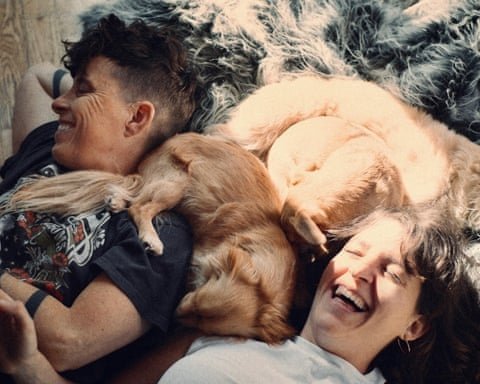
A new film offers a remarkably raw and intimate look at a couple navigating a devastating terminal diagnosis, focusing not on despair but on the profound happiness found in their final months together.
The documentary, which recently premiered on a major streaming service, centers on a celebrated poet diagnosed with incurable ovarian cancer. Rather than shying away from the well-trodden themes of illness, the film leans into them, exploring the mantras we often hear but struggle to live by: to love harder, laugh more, and savor every moment. The poet reflects in the film that while the diagnosis was the start of a nightmare, it also made happiness easier to find by underscoring the finite nature of life.
What emerges is a portrait that is tender, hard-won, and luminous. The couple’s life is measured in three-week increments—the time between blood tests that quantify the cancer’s progression. A high score brings shock and processing; a low score brings utter joy and a temporary period of lightness. The film sits with immense pain—the chemotherapy, the tears, the grief of impending separation—but its lifeblood is a disarming, dark humor that the couple shares with each other and the filmmakers.
The poet, a magnetic and chatty presence, proves uniquely qualified to stare down the big feelings surrounding mortality. A former spoken word artist known for fearless performances, they are shown as amiable and boundary-pushing, frequently breaking the fourth wall to invite the crew into their circle of trust, their intimacies, and their raunchy jokes.
The director constructs a delicate portrait, weaving together readings of the poet’s most poignant works with archival footage. It traces their journey from a closeted queer youth in rural Maine to a depressed young adult who found purpose in poetry, eventually commanding stages with the presence of a rockstar. A central thread is the poet’s hope to stage one final, celebratory performance before their death.
That final show, attended by friends and fellow artists, stands as the film’s public triumph. Yet its primary feat is its direct, unvarnished honesty. It tackles profound ironies: the partner, who spent years writing a memoir about body image struggles, now watches the poet long for any body that is healthy. The poet must weigh a potentially life-extending treatment against the risk of permanently losing their voice. The film also explores how a lifetime of grappling with gender confusion and dysphoria seemed to melt away in the face of death, with the poet noting that identity itself began to fall away.
Most strikingly, the documentary reveals how a person who had long lived with a persistent desire to die, and who spoke frankly of self-harm in their art, suddenly felt a prodigious and powerful desire to live.
The poet passed away in July, surrounded by immense love from their partner, family, pets, and friends. The film chooses not to mark this date with a footnote. Instead, it concludes some time before, with the poet vibrant on screen, vibrating with the sheer wonder of being alive.