
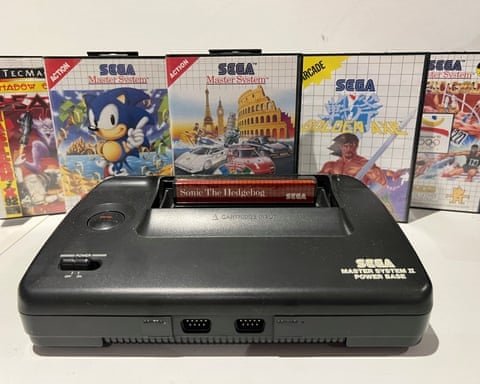
While one Japanese gaming giant captured global attention during the 1980s, a different story unfolded across Europe. There, a technically advanced contender from Sega established a dominant presence that reshaped the continent’s gaming landscape.
The Master System, known initially in Japan as the Mark III, leveraged superior hardware that outpaced its primary competitor. Built around the Z80 processor and featuring a custom video chip, it supported more on-screen colors and sprites, delivering a visual experience that felt generations ahead.
Sega’s strategic decision to partner with local distributors proved crucial in Europe. Companies like Virgin Mastertronic understood regional markets far better than overseas rivals, employing youth-focused marketing that resonated with teenagers. This approach contrasted sharply with the family-oriented campaigns that succeeded elsewhere but faltered across much of Europe.
The console’s arcade roots became a key selling point. Sega translated hit titles like Out Run, Space Harrier, and After Burner into living rooms, offering a taste of the arcade experience at home. For developers, the hardware was a revelation—powerful, accessible, and backed by supportive engineering teams.
Even as Sega’s 16-bit successor arrived, the Master System maintained strong support in Europe and Brazil, receiving scaled-down versions of popular titles and exclusive gems like Wonder Boy III: The Dragon’s Trap and Phantasy Star. These titles have since become collector favorites, often remaining more affordable than their counterparts.
Though frequently overlooked in broader gaming histories, the Master System secured a lasting legacy in key international markets, proving that victory in the console wars wasn’t always determined by global sales figures.