
A pending agreement between the United States and China would place the American operations of TikTok under the control of a powerful new ownership group, one dominated by longtime allies of former President Donald Trump.
Should the deal proceed as outlined, a consortium of U.S. investors led by software firm Oracle would license TikTok’s core algorithm and assume responsibility for its data security. The arrangement would fundamentally reshape the social media landscape by placing one of the nation’s most influential platforms in the hands of the country’s most prominent conservative media figures.
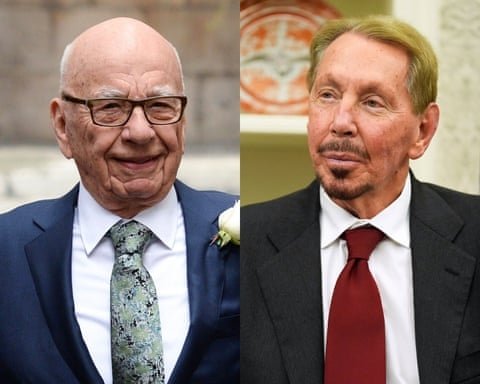
The new ownership structure is expected to include a seven-member board of directors, with six of the seats held by American citizens. Among the names floated for these positions are media mogul Rupert Murdoch and his son Lachlan, the CEO of Fox Corporation. Also under consideration are Oracle co-founder Larry Ellison and his son David, the CEO of Paramount Skydance.
This consolidation would grant an unprecedented level of influence over American media to a small circle of billionaires. The Murdoch family already commands a vast conservative media empire through Fox News, while the Ellisons have rapidly expanded their entertainment holdings. David Ellison’s company recently completed its acquisition of Paramount, giving it control over CBS, Nickelodeon, and other major networks, and is reportedly preparing a bid for Warner Bros Discovery, the parent company of CNN and HBO.
The potential for such concentrated media power raises significant antitrust questions. While FCC rules explicitly prohibit mergers among the major broadcast networks, the regulations governing cable news and social media are far less clear. The commission has previously relaxed ownership rules, citing the proliferation of new media sources, a precedent that could pave the way for this type of consolidation.
The deal appears to hinge on presidential favor rather than strict regulatory adherence. The current administration has successfully asserted control over the FCC, and a recent Supreme Court decision upheld the president’s authority to reshape the commission. This shift has already influenced network programming decisions, with several major broadcasters altering their lineups in ways that align with the administration’s preferences.
If finalized, this agreement would mark a dramatic turning point, aligning a platform used by millions of young Americans with the ideological direction of the nation’s most powerful conservative media outlets.