Recent photographic evidence indicates Israel has employed widely prohibited cluster munitions during its recent 13-month conflict in Lebanon, marking the first such deployment in nearly two decades.
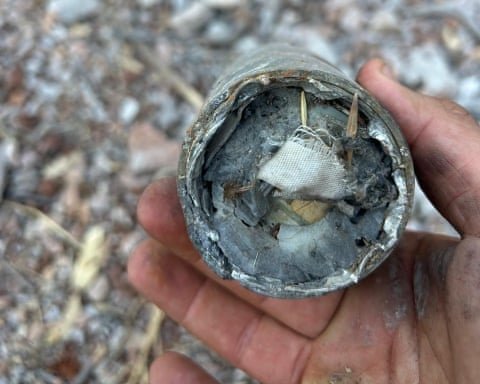
Weapons specialists have identified remnants of two advanced cluster munition types—the 155mm M999 Barak Eitan and 227mm Ra’am Eitan guided missiles—discovered across multiple locations in southern Lebanon’s forested valleys. These findings represent the first documented use of these newly developed munition systems.
Cluster weapons function by dispersing numerous smaller explosives across vast areas, comparable to several sports fields in size. Their prohibition stems from the persistent danger posed by unexploded submunitions, which can remain lethal for years after conflicts conclude. International treaties banning these weapons have been ratified by 124 nations, though Israel remains outside these agreements.
“Cluster munitions fundamentally violate humanitarian principles due to their indiscriminate effects during deployment and the enduring threat they pose to civilian populations,” stated Tamar Gabelnick of the Cluster Munition Coalition. “These weapons cannot distinguish between military targets and civilians, and their remnants continue claiming lives long after hostilities cease.”
Israeli military officials neither confirmed nor denied the allegations, maintaining that their forces “employ only lawful weaponry in compliance with international law while taking measures to minimize civilian casualties.”
The conflict with Hezbollah, spanning from October 2023, resulted in nearly 4,000 Lebanese and approximately 120 Israeli fatalities, leaving southern Lebanon extensively damaged despite a ceasefire agreement.
Lebanon carries particular sensitivity regarding cluster munitions, having suffered extensive contamination during the 2006 conflict when Israel deployed an estimated 4 million cluster bombs. Approximately one million failed to detonate initially, leading to over 400 subsequent casualties from unexploded ordnance.
Weapons analysts including Brian Castner of Amnesty International and NR Jenzen-Jones of Armament Research Services verified the munition remnants. The M999 artillery shells reportedly disperse nine submunitions that fragment into 1,200 tungsten shards, while the Ra’am Eitan missiles allegedly carry 64 bomblets designed to eliminate all personnel within their impact radius.
Though Israel has developed newer cluster munitions claiming reduced failure rates, weapons monitoring organizations caution that actual field performance often significantly exceeds manufacturers’ specifications. Human rights advocates maintain that cluster weapons cannot be deployed without violating international humanitarian standards due to their inherent inability to distinguish between combatants and civilians.
The forested terrain where remnants were discovered had been identified by Israeli forces as providing concealment for Hezbollah operations, potentially explaining the choice of wide-area munitions. Similar tactical considerations led US forces to employ cluster weapons in Vietnam’s jungle warfare.
This development occurs despite Israel’s previous condemnation of cluster munition use by other military actors in the region, highlighting ongoing international controversy surrounding these weapons systems.