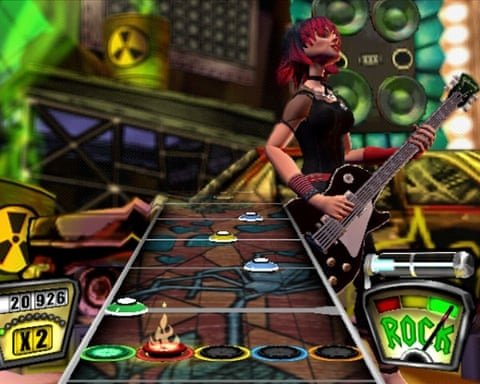
Two decades ago, a video game arrived with a simple but revolutionary premise: a plastic guitar controller that let players live out rock star fantasies in their living rooms. This wasn’t just a pastime; it became a cultural phenomenon that revitalized classic rock and forged an unexpected bridge between generations of music fans.
The game empowered players to hit colorful notes scrolling down the screen in time with iconic songs, creating the sensation of a live performance. For many artists featured, it served as a powerful reintroduction. Bands that had peaked decades earlier suddenly found their music discovered by a new, younger audience, effectively shedding any “dad rock” labels and gaining fresh relevance.
Securing the music was a major hurdle initially, with developers relying on cover versions due to budget constraints. However, the game’s explosive success flipped the script. Record labels and artists soon saw a significant boost in album sales and radio airplay directly linked to their inclusion in the game, making it a highly sought-after platform.
This impact was profound for both established and emerging acts. One guitarist recalled how the game’s exposure was a pivotal moment for his band, leading to recognition from major artists’ crews and helping to launch their career in new territories. For some of rock’s biggest names, dedicated game releases focusing on their catalogs reportedly generated revenue that rivaled or even surpassed their album sales.
The game also cultivated a dedicated community of players who push the boundaries of skill. Recent years have seen fans accomplish near-impossible feats in fan-made versions, perfectly executing notoriously difficult songs at double speed. This dedication highlights the lasting appeal of the rhythm-game format.
Interestingly, the line between virtual and real musicianship remains distinct. One guitarist, whose band’s difficult track became a benchmark in the game, sees it as pure fantasy—a fun challenge separate from the years of practice required to play an actual instrument. He acknowledges, however, that the game’s exposure made his band a household name, leading to a dramatic surge in popularity.
At its core, the game tapped into a fundamental human desire: the thrill of musical performance. The founders aimed to use technology to unlock that instinctive joy for a mass audience.
After a flurry of releases in its first five years, the original series slowed down. Yet, the spirit of the game lives on through community-driven projects and new titles from modern platforms. With a new studio formed by the original creators now developing a rhythm-based game, the question arises: is the world ready for a comeback?
The potential seems evergreen. With a constant stream of new music, the concept could theoretically be updated perpetually. The legacy of those plastic guitars endures, proving that the desire to step into the spotlight and play along with a favorite song is a timeless thrill.