
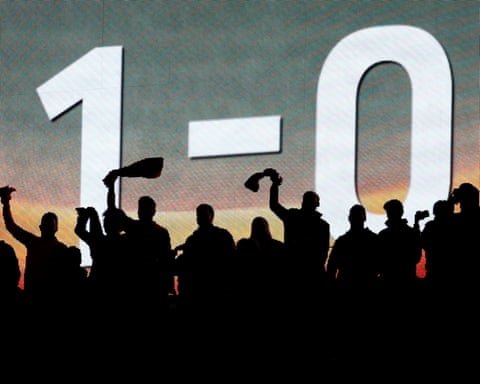
The 1-0 result stands as one of football’s most frequent outcomes, but recent events in France’s Ligue 1 have raised questions about just how common this scoreline can become. Last weekend saw seven of nine matches conclude with 1-0 results, representing 78% of games in that round.
Historical research reveals even more remarkable instances. During the 2016-17 Championship season in England, eight of twelve matches in one round finished 1-0. However, the most concentrated occurrence appears in Turkey’s 2012-13 Süper Lig, where eight of nine matches (nearly 89%) ended 1-0 during one particular round in April 2013.
Beyond scorelines, football history presents other intriguing patterns. Capital cities experiencing prolonged title droughts represent another curious phenomenon. Edinburgh clubs Hearts and Hibernian haven’t claimed Scotland’s top division in 65 and 73 years respectively. Berlin’s situation proves even more complex – while Hertha BSC last won the German championship in 1931, the city’s status as capital has been interrupted throughout this period.
The managerial world offers its own remarkable statistics. The 1930 World Cup final featured opposing coaches with a combined age of just 59 years, with Argentina’s Juan José Tramutola being only 27 at the time.
Passing accuracy records also capture attention. While recent performances have seen players complete all their passes in matches, Philipp Lahm’s 134 successful passes without failure for Bayern Munich against Hertha Berlin stands as a particularly impressive benchmark.
Football’s qualification histories reveal unexpected pathways to success. North Korea’s journey to the 1966 World Cup quarter-finals involved multiple withdrawals by other Asian nations and comprehensive victories over Australia in neutral Cambodia.
These statistical curiosities demonstrate how football’s rich history continues to produce remarkable patterns and records worthy of examination.