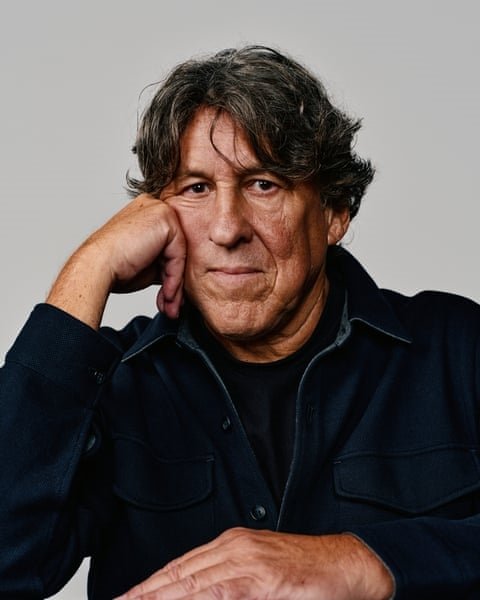
A celebrated director is opening up about the formative experiences that shaped his career, revealing for the first time the profound family tragedy that underpinned his journey from a teenage music journalist to an Oscar-winning filmmaker.
In a new memoir, the artist recounts his surreal adolescence, which saw him navigating suburban life while simultaneously embedding himself in the 1970s rock scene. As a teenager, he conducted interviews with iconic acts, from the raw power of Led Zeppelin to the enigmatic David Bowie. These experiences would later form the backbone of his beloved film about a young journalist on the road with a rising band.
The memoir, however, delves much deeper than rock and roll anecdotes. It centers on two powerful, emotional themes: a deeply driven and complex family, and the solace he found in the three-minute pop song.
He describes his mother as an “unstoppable force,” a college teacher who fiercely believed in him. She accelerated his education, leading him to graduate high school three years early, a move that left him feeling like a perpetual outsider—a feeling that inspired the title of his book. Even at the peak of his success, she held out hope he would pursue a more conventional career, famously telling him the night he won his Oscar, “It’s not too late to go to law school.”
For the first time, the filmmaker is also writing about a foundational family trauma: the death of his eldest sister, who took her own life in 1967. He describes this loss as an “unresolved pain” that the family rarely discussed. His father’s simple explanation was, “She was in pain.” It was, he writes, the only time he ever saw his father cry.
He explains that the decision to finally explore this chapter came with time and the availability of new archives. Discovering small mentions of his sister in local newspapers and a book she loved felt, he says, “like meeting her.” He believes she was likely bipolar, a condition that went undiagnosed and untreated at the time.
It was his sister, he reveals, who first introduced him to the power of music. He associates specific songs with her memory, describing her as “the most organic and true music fan in our family.” This early connection to music became a cure for the “strange itch of not belonging” he felt throughout his youth.
His career as a writer began with breathtaking audacity at the age of 14, when he hustled his way backstage at a concert arena and scored interviews with multiple major bands in a single night. “There was no stopping me once I walked in the door,” he recalls. “I just felt like … all things were possible.”
This led to assignments for a major music magazine, where his youth and sobriety sometimes created surreal situations. On tour with a legendary southern rock band, the lead singer, in a drug-fueled paranoia, accused him of being an undercover agent and confiscated all his interview tapes. For days, the young writer was convinced his career was over before it started, until a wave of remorse led the musician to return them.
He became known as an interviewer who could put artists at ease, spending a year and a half with David Bowie during a famously turbulent period. Despite Bowie’s public persona at the time, the director remembers a surprisingly warm individual who gave him rides home and talked openly about life and music.
Now, after a decade away from directing feature films, the filmmaker says he feels a nagging itch to return, particularly to make a movie about journalism. He expresses deep concern over the marginalization of the press.
“If a young writer thinks for one second that journalism isn’t as important in our current environment,” he states, “I’ll shove my book into their hand and I’ll say, ‘This is what journalism did for me. Journalism gave me a voice in the world.’”
His next project will be a biopic of a legendary singer-songwriter, told from her own point of view. He describes the process as a “delight,” noting that her music is “already so cinematic.”