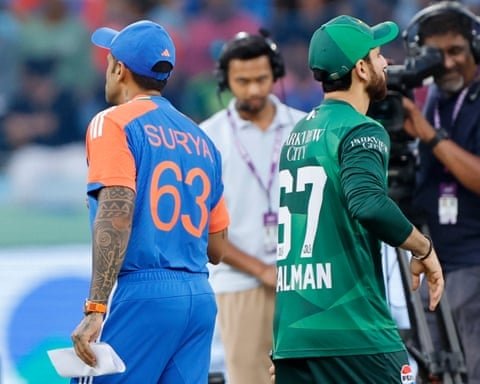
A simple, customary gesture has become the center of an international controversy following a high-stakes cricket match. After a decisive victory by one team over its long-standing rival, players from the winning side conspicuously declined to participate in the traditional post-game handshake, choosing instead to gather their equipment and exit the field immediately.
The omission was immediate and stark. Within hours, the incident, quickly dubbed “Handshakegate,” was trending across social media platforms, with video clips dissected frame by frame. The snub prompted a formal complaint from the losing team’s cricket board, which was met with the defense that a handshake is a convention, not a codified rule of the sport.
The team captain later clarified that the action was a direct consequence of escalating military tensions between the two neighboring nuclear powers. Recent cross-border hostilities, including airstrikes and militant attacks, have severely strained diplomatic relations. In this charged atmosphere, the refusal to shake hands transcended mere sporting etiquette, becoming a potent symbol of a deep political rift.
Cricket has a long history of carrying significance far beyond the boundary rope. The post-match handshake is intended to signify that the competition, however fierce, remains confined to the field of play. Its absence sends an unambiguous message of unresolved conflict. The preamble to the sport’s code of conduct explicitly calls for players to “respect opponents,” and the handshake is the most visible embodiment of that principle.
The history of the game is punctuated by handshakes that carried immense weight, from moments that helped forge legendary rivalries to instances of “cricket diplomacy” where leaders used the sport as a backdrop for easing tensions between nations on the brink of conflict. Conversely, the sport has also seen its share of handshake-related flashpoints, where the refusal to clasp hands has exposed simmering feuds or served as a form of protest.
Social psychologists note that a handshake is a powerful non-verbal cue that shapes first impressions, signaling trust and mutual respect. In a sport deeply bound by ritual and the perception of fair play, this seemingly minor gesture holds profound importance. Its deliberate absence is therefore felt not merely as a personal snub, but as a breach of an unspoken contract—a violation of the spirit of the game itself.