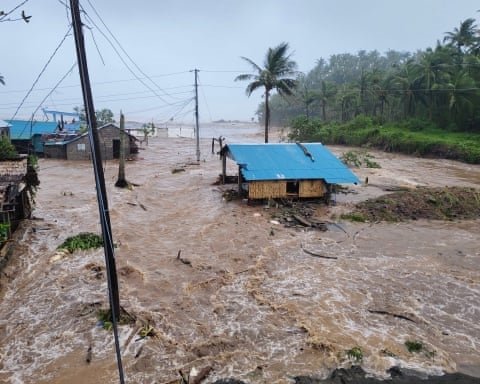
A powerful typhoon has carved a path of destruction across the Philippines, resulting in multiple fatalities and the mass displacement of over a million residents. The storm, which brought catastrophic winds and torrential rain, has left communities submerged and infrastructure severely damaged.
Authorities report that at least eight lives have been lost. The scale of the evacuation was immense, with more than 1.4 million people moved to safety ahead of the storm’s arrival. The typhoon’s immense span affected a vast portion of the island nation, leading to widespread flash floods and destructive landslides.
In one of the hardest-hit provinces, dramatic rescue operations unfolded. Emergency teams saved numerous individuals, including a family of five who were trapped as their home’s roof was on the verge of being torn off by the ferocious winds. In northern regions, landslides proved particularly deadly, claiming the lives of several children.
The storm’s intensity has since diminished as it moved over the main island, but damaging gusts persisted. The aftermath has left nearly three million people without electrical power after the storm crippled the energy grid. Thousands of evacuation centers are now operational, providing temporary shelter for tens of thousands of families.
This disaster comes on the heels of another severe typhoon that struck the region just days prior, exacerbating the situation. The successive storms saturated the ground, increasing the risk of further landslides.
The nation’s president has announced that a state of national calamity, initially declared for the previous storm, will be extended for a full year to facilitate the recovery effort. The frequency of such intense weather systems impacting the archipelago has been noted to have increased significantly in recent years.