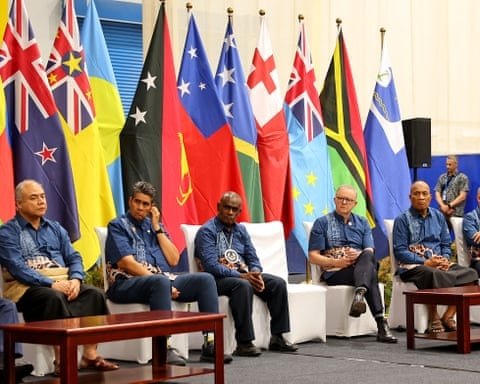
Pacific leaders concluded their annual gathering with significant agreements on climate financing and regional security, while navigating complex geopolitical dynamics. The week-long summit in Honiara saw participation from Australia, New Zealand, and sixteen Pacific nations against a backdrop of increasing international competition for influence in the region.
A major achievement was the establishment of the Pacific Resilience Facility, a climate fund designed to help communities prepare for natural disasters and climate impacts. This initiative addresses longstanding challenges in accessing international climate financing for small-scale projects across the islands.
Australia secured regional backing for its bid to co-host the 2026 UN climate conference, despite ongoing questions about its domestic energy policies. Pacific representatives emphasized the importance of this collaborative opportunity for the region’s climate advocacy.
The forum adopted the Blue Pacific Ocean of Peace Declaration, affirming the region’s commitment to maintaining peace and sovereignty amid global tensions. Leaders described the declaration as reinforcing their determination to keep the Pacific free from militarization and great power competition.
Discussions around regional partnerships saw leaders agree to new protocols ensuring continued participation of development partners in future meetings, following debates about external involvement in forum proceedings.
Separately, Australia’s efforts to finalize a comprehensive partnership agreement with Vanuatu encountered delays, with Vanuatu officials requesting additional time to review the arrangement’s terms. Meanwhile, Australia and Fiji announced plans to enhance their security cooperation through upgraded agreements.