A hidden financial network that enables North Korean defectors to send money to relatives back home is facing collapse due to heightened legal pressure in South Korea and the lingering effects of pandemic-era border shutdowns.
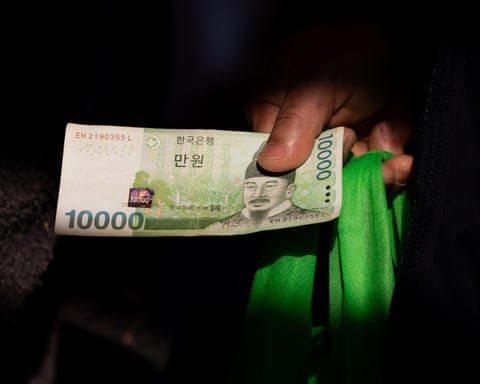
These informal transfer systems, often operated by former defectors themselves, function through a multi-stage process. Funds are first converted from South Korean won into Chinese currency, then moved through intermediaries in China before being smuggled across the border for final delivery to families. Communication to confirm receipt is precarious, sometimes relying on Chinese mobile signals near the border and video proof of the money being counted.
For those who have escaped North Korea, these remittances are a vital lifeline. One defector, now working in Seoul, described how the money he used to send ensured his family could eat white rice for a year—a significant marker of stability in the North. He shared that he took on numerous part-time jobs during his studies, sacrificing sleep and academic focus to save any extra cash for his family. He now fears that without these funds, a younger sibling could be forced into military conscription, as the family would lack the means to pay bribes for an exemption.
The scale of this activity is significant. A survey by a human rights organization indicated that 40% of defectors had sent money to the North within the last five years. However, brokers’ commissions and various bribes along the route mean that families ultimately receive only about 60% of the original amount.
This long-tolerated practice is now under unprecedented scrutiny. South Korean authorities, after initially focusing on national security concerns, have shifted to prosecuting these transfers as financial crimes. The core legal issue is that currency exchange operations must be registered with the government, an impossibility for transactions with North Korea due to the lack of legal financial channels between the two technically warring states. Several individuals involved in facilitating the transfers are currently on trial for violating foreign exchange laws.
The crackdown has had a devastating impact. One long-time operator of such networks estimates that about 70% of their routes have been dismantled, describing the system as nearly impossible to rebuild. This has left defectors stranded; many are now unwilling to trust new, unvetted brokers for fear of being scammed.
In response to the emerging crisis, some lawmakers are pushing for legislative change. A bill is reportedly being drafted to legalize small-scale remittances for purely humanitarian purposes. A government official acknowledged the dilemma, stating that the issue requires balancing strict legal compliance with the humanitarian need to support families.
Beyond the immediate human cost, the decline of these networks also narrows a rare window into North Korean society. South Korean intelligence has historically gleaned valuable information from the natural flow of communication through these family connections.
For the defectors, the issue is profoundly personal. One individual lamented that he recently got married, but his family back home remains unaware. He holds onto the hope of finding a way to send both money and his happy news for the upcoming holidays, seeing these remittances as his only way to care for his family and ease the guilt of having left them behind.