
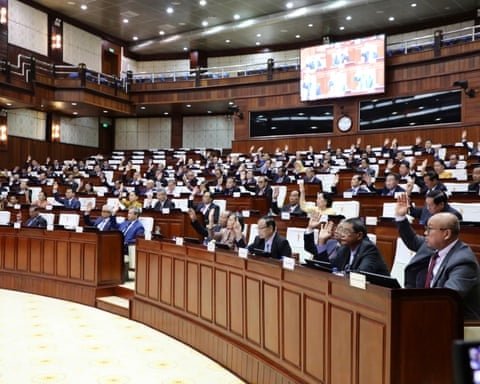
A new law granting the government the power to strip individuals of their citizenship has been passed by Cambodia’s parliament. The legislation targets citizens accused of “collusion” with foreign entities, a move critics argue could be exploited to suppress political opposition.
The bill was approved unanimously by the National Assembly, authorizing the state to revoke the nationality of those deemed to have committed acts undermining national sovereignty or security. A committee established by the interior minister will oversee the revocation process.
This legislative change follows a recent constitutional amendment that removed the unconditional right to citizenship, specifying instead that nationality would be “determined by law.” Previously, citizenship was a protected constitutional right.
Government officials have defended the law as necessary to address threats from citizens allegedly cooperating with foreign nations, specifically mentioning neighboring Thailand. Recent border clashes have heightened tensions between the two countries.
Human rights organizations have condemned the legislation, warning that its vague wording could lead to widespread abuse. They express concern that it may be used to target activists, journalists, and government critics under the pretext of national security.
International human rights groups have described the law as a violation of international standards, noting that Cambodia’s judiciary lacks the independence to provide a fair check on executive power. Dozens of opposition figures are currently imprisoned or facing legal action, highlighting an ongoing crackdown on dissent.
The law now moves to the Senate and the head of state for final approval, steps widely viewed as formalities.