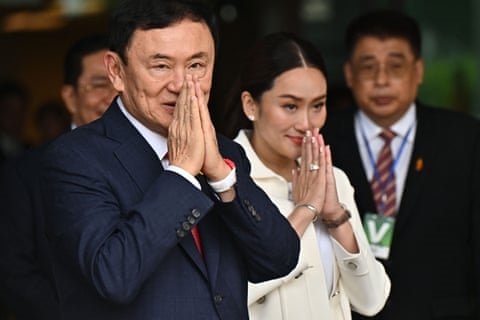
A Thai criminal court has dismissed charges against former prime minister Thaksin Shinawatra for allegedly defaming the monarchy. The decision marks a temporary legal victory for the prominent political figure, though his family continues to face significant judicial challenges that could reshape the nation’s political landscape.
The case stemmed from a 2015 interview Thaksin gave to a South Korean publication, in which prosecutors claimed he had insulted the royal institution. The court determined insufficient evidence existed to support the allegations. Thailand’s lese-majesty legislation ranks among the world’s strictest, carrying potential prison sentences of three to fifteen years for those found guilty of criticizing the monarchy.
Despite this favorable ruling, the Shinawatra political dynasty confronts additional legal battles. Next week, the constitutional court will determine whether Thaksin’s daughter, currently suspended as prime minister, should be permanently removed from office. That case involves allegations concerning her handling of border negotiations with Cambodia.
Thaksin himself faces separate legal proceedings regarding the circumstances of his 2023 return from self-imposed exile. The billionaire businessman, who previously served as prime minister from 2001 until his ouster in a 2006 military coup, had spent over fifteen years abroad avoiding what he described as politically motivated charges.
The current legal proceedings highlight the ongoing tension between elected officials and Thailand’s established power structures. Court interventions in political matters have become increasingly common, with judiciary decisions frequently altering the country’s political direction.
Analysts note that while the Shinawatra family historically maintained strong support among rural communities, their political standing has weakened in recent years. Factors contributing to this decline include perceived compromises with former political opponents and dissatisfaction with economic performance and border policy management.
The upcoming court decision regarding the prime minister’s position could potentially trigger renewed political instability, continuing the pattern of judicial interventions that have characterized Thai politics for nearly two decades.